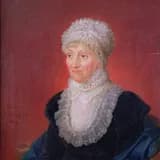
Herschel became the first woman to receive the Gold Medal of the Royal Astronomical Society, honoring her lifetime contributions to astronomy.
On 8 February 1828, the Royal Astronomical Society awarded Caroline Herschel its prestigious Gold Medal, making her the first woman ever to receive this distinction. The award recognized her extensive catalogue work, including her revisions and additions to star catalogues and her decades of meticulous observational astronomy.
The Gold Medal is one of the highest honors in astronomy, and its award to Caroline—by then 77 years old—was a remarkable acknowledgment of a woman's scientific achievements at a time when women were still barred from formal membership in most scientific societies, including the Royal Astronomical Society itself, of which she could not become a full member despite this honor.
The medal specifically recognized her work compiling and correcting the Index to Flamsteed's Observations of the Fixed Stars, along with a catalogue of errata and a list of over 560 stars omitted from British star catalogues—an enormously laborious task requiring exceptional mathematical and organizational skill.
This award was historically significant not only for honoring Caroline personally, but for establishing, however slowly, a precedent that women could be recognized at the highest levels of astronomical achievement. It would be more than 160 years before another woman (Vera Rubin, in 1996) received the same medal, underscoring how exceptional and pioneering Caroline's recognition was for her time.