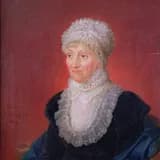
Herschel discovered comet C/1786 P1, becoming the first woman in history credited with discovering a comet.
On 1 August 1786, while sweeping the skies with her telescope at Slough, England, Caroline Herschel discovered a comet later designated C/1786 P1 (Herschel). This discovery is widely recognized as the first comet ever discovered by a woman, a landmark moment in the history of science.
At the time, comet hunting was considered a prestigious pursuit within astronomy, requiring immense patience, sharp observational skill, and detailed knowledge of the night sky in order to distinguish a new, moving object from the thousands of fixed stars and known nebulae. Caroline's success came after years of rigorous training under her brother William, during which she meticulously learned to use reflecting telescopes and record celestial positions with mathematical precision.
The discovery brought her immediate recognition within the scientific community, with reports of her find published in astronomical circles across Europe. It fundamentally challenged prevailing assumptions about women's capacity for scientific observation and discovery, at a time when women were barred from universities, scientific societies, and most forms of formal scientific training.
This first comet discovery launched what would become a prolific career: Caroline would go on to discover a total of eight comets between 1786 and 1797, cementing her reputation as one of the era's foremost comet hunters and paving the way for future generations of women in astronomy.