← All women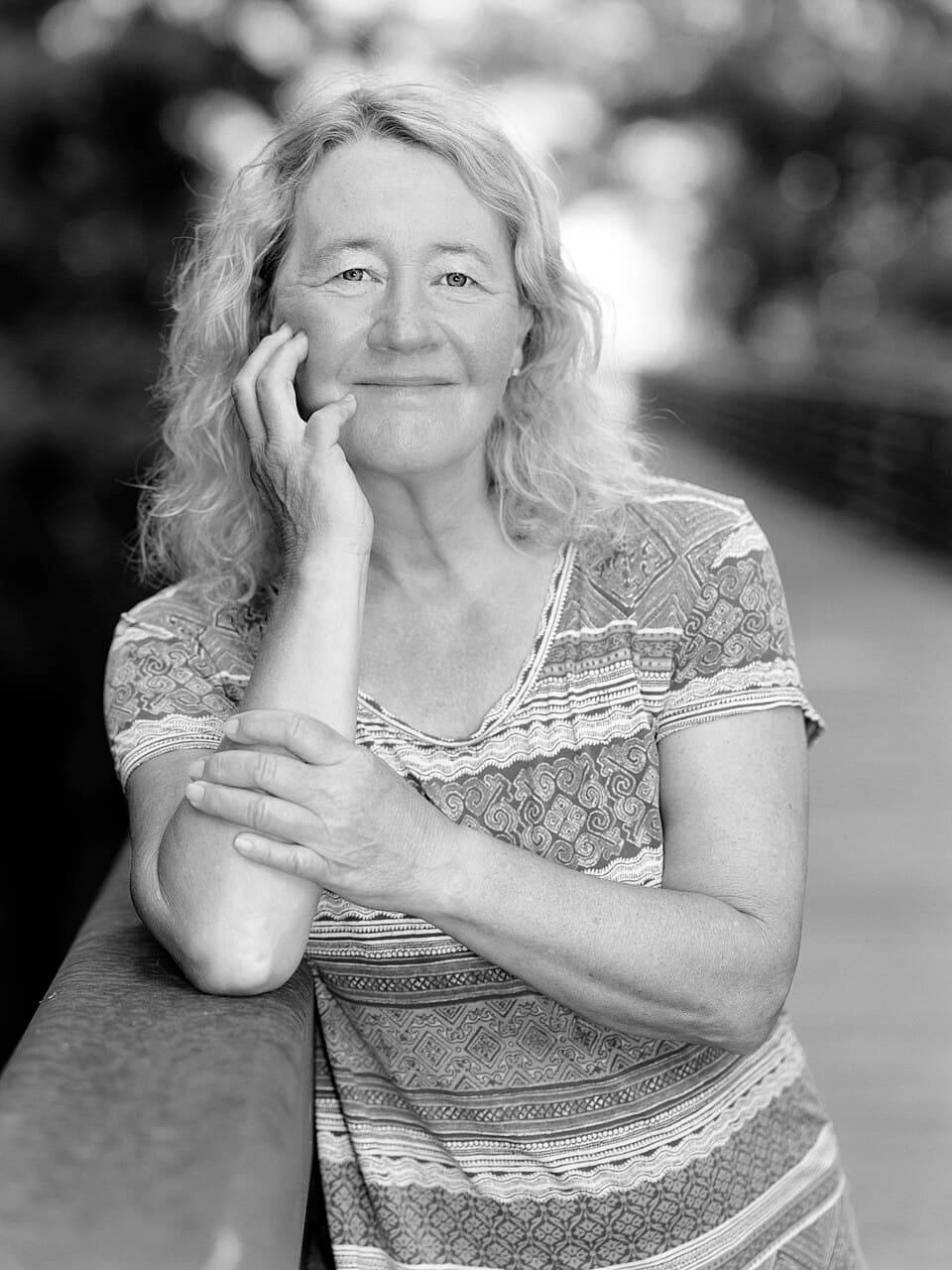
American · Science · Medicine
Carol W. Greider
April 15, 1961 – present
Early Life and Background
Carolyn Widney Greider was born on 15 April 1961 in San Diego, California, United States, to Jean Foley Greider and Kenneth Greider.[1][11] She grew up in a family that valued intellectual curiosity, but her childhood was marked by challenges related to dyslexia, which affected her ability to learn through conventional methods.[6][13][14] Greider has later described how these difficulties required her to develop persistence, creative problem-solving strategies, and a strong work ethic, traits that would become central to her scientific career.[13][14]
During her school years, Greider gravitated toward science despite struggles with reading and standardized assessments. Accounts from later interviews and profiles emphasize that teachers and family support helped her navigate an educational system that was not yet well-equipped to recognize or accommodate learning differences like dyslexia.[6][13][14] The experience of overcoming these obstacles shaped her confidence and contributed to her interest in research environments where unconventional thinking and resilience were assets.
After high school, Greider enrolled at the University of California, Santa Barbara (UCSB), joining the College of Creative Studies, an experimental program designed to foster independent and research-oriented study. She earned a B.A. in biology from UCSB in 1983, an experience she later credited with giving her early exposure to hands-on research and the freedom to explore ambitious scientific questions.[8][10]
Education and Formative Scientific Training
Following her undergraduate degree, Greider entered the University of California, Berkeley to pursue graduate work in molecular biology.[1][8][9] At Berkeley she joined the laboratory of Elizabeth H. Blackburn, who was already recognized for her pioneering work on telomeres, the specialized DNA sequences at the ends of chromosomes.[1][3][9]
In Blackburn’s lab, Greider began research that would define her career: exploring how telomeres are maintained and protected during DNA replication. In 1984, as a first-year graduate student, she undertook biochemical experiments on the ciliated protozoan Tetrahymena, seeking evidence for an enzyme that could extend telomeric DNA.[3][5][8] On Christmas Day 1984, she observed enzymatic activity consistent with the addition of telomeric repeats, a discovery later recognized as the first experimental detection of telomerase.[3]
Greider completed her Ph.D. in molecular biology at UC Berkeley in 1987. Her dissertation work, conducted under Blackburn’s supervision, focused on telomere function and the enzymatic mechanisms of telomere maintenance.[8][9][10] During this period, Greider and Blackburn co-discovered telomerase and began to elucidate its role in chromosome biology, work that would have far-reaching consequences for the understanding of cell division, aging, and cancer.[1][3][5][8][9]
Career Beginnings and Move to Cold Spring Harbor Laboratory
After earning her Ph.D., Greider remained briefly at Berkeley before moving on to independent research positions. In 1988, she joined Cold Spring Harbor Laboratory (CSHL) in New York as an independent Cold Spring Harbor Fellow, an appointment that allowed her to establish her own laboratory early in her career.[4][11] Sources describe this transition as occurring in mid-1988, although an exact calendar day is not specified.[4]
At CSHL, Greider continued to investigate telomerase and telomeres. She cloned and characterized the RNA component of telomerase, demonstrating that the enzyme uses an internal RNA template to add specific DNA repeats to telomeres.[4][11] These findings built directly on her earlier biochemical detection of telomerase and were critical for understanding the enzyme’s structure and function.
CSHL provided a fertile environment for Greider’s work. The institution was a major center for molecular genetics and cancer biology, and Greider’s research fit squarely within emerging interests in genome stability and oncogenesis. Her ability to secure an independent fellowship at such a prominent laboratory reflected both the promise of her scientific ideas and an increasing—though still limited—willingness in the late 1980s to entrust young women scientists with independent leadership roles.
Major Discoveries: Telomerase and Telomere Biology
Greider’s most influential work centers on her co-discovery of telomerase and subsequent elucidation of telomere maintenance mechanisms. Telomeres consist of repetitive DNA sequences at chromosome ends that protect genetic material from degradation during replication. Prior to her work, the mechanism by which telomeres were maintained was largely speculative.
Through biochemical experiments begun in 1984, Greider demonstrated that extracts from Tetrahymena contained an enzyme that could add telomeric repeats to synthetic DNA substrates.[3] She and Blackburn showed that this enzyme, telomerase, uses an RNA template to extend chromosome ends, solving the "end-replication problem" associated with linear DNA replication.[1][3][8][9]
Over subsequent years, Greider’s research helped reveal how telomerase activity is regulated and how telomere length influences cellular lifespan. She and others showed that insufficient telomerase activity leads to progressive telomere shortening, cellular senescence, and genome instability, while excessive activity contributes to cancer by allowing cells to divide indefinitely.[1][2][3][11]
Her work established telomere biology as a central theme in molecular and medical research. Telomeres became recognised as key players in aging, degenerative diseases, and tumorigenesis, with telomerase emerging as a major therapeutic target. Greider’s contributions included biochemical characterization, genetic analysis, and the development of models linking telomere dynamics to disease.[1][3][11]
Academic Positions and Research Leadership
After her time at Cold Spring Harbor Laboratory, Greider continued to build a distinguished academic career. She joined the Johns Hopkins University School of Medicine, where she became a professor in the Department of Molecular Biology and Genetics.[2][7][11][15] At Johns Hopkins, she led a research group focused on telomere biology, telomerase regulation, and the relationship between chromosome stability and disease.
Institutional profiles describe her as serving as Director of the Department of Molecular Biology and Genetics and holding endowed positions such as the Daniel Nathans Professor and later a Bloomberg Distinguished Professor.[10][15] In these roles, she oversaw research programs, mentored graduate students and postdoctoral fellows, and contributed to shaping the university’s strategic directions in basic biomedical science.
Greider’s laboratory pursued questions about how telomere length is controlled, how telomerase is regulated in somatic and germline cells, and how telomere dysfunction contributes to human pathologies. Her work extended beyond basic mechanisms to explore the implications of telomere biology in aging, bone marrow failure syndromes, and cancer, integrating molecular genetics with clinical research perspectives.[1][2][11]
Awards, Honors, and Recognition
Greider has received numerous awards and honors recognizing her contributions to molecular biology and medicine.
- In the early 1990s and 2000s she received major research awards including the AACR Award for Outstanding Achievement in Cancer Research (Rhoads Award), the Gairdner Foundation International Award, the Rosenstiel Award, and the Passano Foundation Award, for work on telomeres and telomerase; available sources generally provide award years but not specific dates.[3][11]
- She was elected a member of the U.S. National Academy of Sciences in 2003, reflecting her stature as a leading figure in American science.[3][11]
- On 28 April 2003, the National Academy of Sciences announced that Greider and Blackburn would receive the Richard Lounsbery Award, and on 30 April 2003 they formally received the prize in Washington, D.C., recognizing their pioneering biochemical and genetic studies of telomerase.[5]
- On 10 March 2006, Greider, Blackburn, and Szostak received the Albert Lasker Award for Basic Medical Research in New York City for their discoveries concerning telomeres and telomerase.[10]
- On 4 April 2006, Rockefeller University announced that Blackburn and Greider would receive the Wiley Prize in Biomedical Sciences; Maryland State Archives notes that Greider was the first woman to win this prize.[4] The award was formally presented on 12 May 2006 at Rockefeller University.[4]
- She later received the Dickson Prize in Medicine and the Louisa Gross Horwitz Prize (shared with Blackburn and Joseph G. Gall) in 2007, awards that further recognized her role in establishing telomere biology as a major field.[3][11]
- In 2009, she was honored by UCSB as the first UCSB alumna to receive a Nobel Prize, distinguished among the institution’s Nobel-affiliated community.[10]
The pinnacle of Greider’s recognition came with the 2009 Nobel Prize in Physiology or Medicine. On 5 October 2009, the Nobel Assembly announced that the prize would go jointly to Blackburn, Greider, and Szostak "for the discovery of how chromosomes are protected by telomeres and the enzyme telomerase".[5][12] On 10 December 2009, Greider received the Nobel medal and diploma from the King of Sweden in Stockholm.[12]
Biographical notes from the Maryland State Archives highlight that at the time of the award, Greider was the youngest woman ever to receive the Nobel Prize in Physiology or Medicine.[4] Her Nobel made her one of only a small number of women laureates in that category since its inception in 1901.[14]
In the same period, she received additional honors. On 4 November 2009, the Paul Ehrlich and Ludwig Darmstaedter Prize Foundation announced that Blackburn and Greider would receive the Paul Ehrlich and Ludwig Darmstaedter Prize for their telomere and telomerase research, with the award ceremony held on 14 March 2010 in Frankfurt’s Paulskirche.[9] On 19 November 2009, The Rockefeller University awarded Greider the Pearl Meister Greengard Prize, a distinction created to honor outstanding women scientists.[13]
On 8 March 2010, Greider was inducted into the Maryland Women’s Hall of Fame, which described her as one of the most important scientific figures of modern times and emphasized her discovery of telomerase and her role in expanding telomere studies.[4]
Personal Life
Greider’s personal life has been mentioned in several biographical sources, though details are limited. She has spoken publicly about her experiences with dyslexia and how her learning differences influenced her scientific approach and resilience.[6][13][14] These accounts highlight the intersection of her personal and professional journeys, emphasizing the importance of perseverance and supportive environments for individuals with learning disabilities.
Sources also note that Greider has children and has balanced family life with a demanding research and teaching career, though specific names and dates are generally not detailed in publicly accessible biographies.[4][11] Her experiences have contributed to her advocacy for more inclusive scientific training and flexibility for researchers with caregiving responsibilities.
Greider has been engaged in mentoring and education, supporting the next generation of scientists and emphasizing the value of diversity, including neurodiversity, in research communities.[13][14] She has also participated in public outreach and discussions about women in science, telomere biology’s health implications, and the broader role of basic research in society.
Legacy and Historical Impact
Carol W. Greider’s legacy rests primarily on her role in establishing telomere and telomerase biology as central to modern molecular biology and medicine. Her co-discovery of telomerase and subsequent research into telomere maintenance mechanisms have fundamentally altered understanding of how chromosomes are protected and how cells age.
By elucidating the molecular basis of telomere elongation and its regulation, Greider helped create new conceptual frameworks for studying cancer, degenerative diseases, and normal aging.[1][2][3] Telomerase became recognized as a potential therapeutic target: inhibition in cancers that rely on telomerase for immortality, and controlled activation in diseases characterized by premature telomere shortening.[2][11] Her work thus bridges basic science and translational medicine.
Historically, Greider is significant as one of the few women to receive the Nobel Prize in Physiology or Medicine and, at the time of her award, the youngest woman laureate in that category.[4][12][14] She has contributed to shifting expectations about women’s roles in high-impact biomedical research and has become an important figure in narratives about women who have changed science.[13]
Her story is frequently cited in discussions of overcoming learning disabilities and barriers in education. Profiles from organizations such as Yale’s Center for Dyslexia and Creativity highlight how her experiences with dyslexia informed her scientific persistence and creativity, offering a powerful example for students facing similar challenges.[14]
Greider’s leadership at Johns Hopkins and her mentoring of students and postdoctoral fellows have further extended her impact. Many individuals trained in her laboratory have gone on to make contributions in telomere biology and related fields, helping to sustain and expand the research area she helped create.[11][15]
Later Career and Continuing Work
In the years following her Nobel Prize, Greider has continued to serve in prominent academic roles. Institutional profiles describe her as a Bloomberg Distinguished Professor, the Daniel Nathans Professor, and Director of Molecular Biology and Genetics at Johns Hopkins University.[10][15] These positions reflect both her scientific achievements and her administrative and educational leadership.
Her ongoing research has addressed telomere length regulation, telomerase function in different cell types, and the consequences of telomere dysfunction in human disease. She has engaged with collaborative projects that connect fundamental telomere biology to clinical observations in bone marrow failure syndromes and other disorders linked to defective chromosome maintenance.[1][2][11]
Greider remains active in scientific organizations and advisory roles. She has been recognized as a fellow of the AACR Academy, which honors distinguished scientists whose contributions have had significant impacts on cancer research.[9] She participates in conferences, lectures, and scientific committees that shape research agendas in molecular biology and oncology.
As of the latest available information, Carol W. Greider is living and continues to contribute to science and education. Her career illustrates the trajectory from a student overcoming dyslexia to a Nobel laureate whose discoveries have transformed understanding of cellular aging and cancer, making her a central figure in both the history of molecular biology and the broader story of women in science.[1][2][4][11][13]
Dated achievements
14 indexed.
- Apr151961Science
Birth of Carol W. Greider
Birth of Carolyn Widney Greider in San Diego, California, a future Nobel laureate in molecular biology.
View details Carol W. Greider – Biographical - Dec251984Science
Experimental detection of telomerase activity
Experimental detection of telomerase activity by Carol W. Greider in Tetrahymena extracts on Christmas Day 1984.