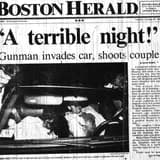
On January 4, 1990, Charles Stuart died by suicide, jumping from the Tobin Bridge the day after being implicated in Carol's murder.
On January 4, 1990, the day after his brother Matthew's confession to police implicated him in orchestrating Carol Stuart's murder, Charles Stuart drove to the Tobin Bridge spanning the Mystic River in Boston and jumped to his death, ending his life before he could be formally charged or brought to trial.
Stuart's suicide effectively foreclosed the possibility of a criminal trial that might have provided a full public accounting of his motives and the precise sequence of events on the night of the murder. For many, his death represented an unsatisfying and abrupt conclusion to a case that had consumed the city for over two months, denying Carol's family and the wrongfully targeted Black men in Mission Hill the opportunity for a formal legal reckoning.
The suicide intensified public anger and left many questions officially unanswered, fueling decades of investigative journalism, books, documentaries, and podcasts attempting to piece together the full truth of what happened. It also crystallized the case as a uniquely tragic chapter in Boston's history — one in which a violent hoax rooted in racial prejudice caused not only Carol's death and that of her infant son, but also devastated the lives of wrongfully accused Black men and left lasting scars on the city's racial relations, policing practices, and media culture.