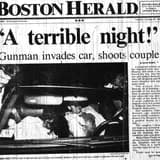
Michael Moore's October 2002 documentary Bowling for Columbine cited the Stuart case as an example of racialized fear shaping U.S. gun culture.
In October 2002, filmmaker Michael Moore released his Academy Award-winning documentary Bowling for Columbine, which examined the roots of American gun violence and gun culture. The film referenced the 1989 murder of Carol Stuart as a case study in how media coverage of crime — particularly crimes falsely attributed to Black perpetrators — perpetuated racialized fear that shaped public attitudes toward guns, self-defense, and law enforcement.
By including the Stuart case among examples of how manufactured or exaggerated narratives of Black criminality fueled a climate of fear in American society, Moore's film helped introduce the case to a new generation of viewers beyond Boston, cementing its place in the broader national conversation about race, media sensationalism, and gun ownership.
This inclusion in a major, widely distributed documentary underscored how the Stuart case had transcended its origins as a local Boston crime story to become a touchstone reference point in critiques of American media and racial bias more broadly. It reflects the long tail of impact that Carol's murder — and the hoax perpetrated by her husband — had on cultural and political discourse more than a decade after the events themselves, illustrating how individual tragedies can become embedded in larger societal narratives about race and violence in America.