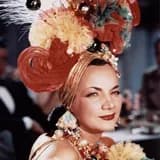
U.S. release of That Night in Rio helped establish her as a major Hollywood musical star.
7 March 1941 saw the U.S. release of That Night in Rio, one of the Technicolor musicals that solidified Carmen Miranda’s Hollywood prominence. By this point, she was no longer merely a novelty imported from Brazil; she was an established star whose screen persona could anchor a major studio film.
The film is historically significant because it reflects Miranda’s rapid ascent in the American entertainment industry during a period when Hollywood musicals were a dominant form of popular culture. Her presence brought Brazilian-inspired performance to mass audiences and helped define the wartime fascination with tropical spectacle. Women performers in this era were often expected to embody glamour while also performing ethnic or regional identity in highly stylized ways, and Miranda met those expectations while asserting extraordinary charisma.
That Night in Rio contributed to her growing transnational fame and to her image as one of the highest-paid women in the United States. Its legacy lies in how it extended her visibility beyond radio and stage into a global screen culture, reinforcing her place as one of the most memorable entertainers of the 1940s.