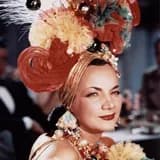
U.S. release of Weekend in Havana reinforced her image in American popular culture.
7 November 1941 marked the U.S. release of Weekend in Havana, another Technicolor musical that showcased Carmen Miranda’s distinctive stage persona. By this point, audiences had come to expect her exuberant presence, lavish costumes, and musical energy as central attractions of Fox’s Latin-themed productions.
This release mattered because it helped confirm Miranda’s durability as a screen star rather than a one-film sensation. Hollywood was quick to package Latin American imagery for popular consumption, but Miranda’s sustained success showed that she could carry repeated projects and remain commercially valuable. She also had to work within a system that often used her as a symbol more than as a fully dimensional character, a common limitation for women and for non-U.S. performers in the studio era.
Weekend in Havana belongs to the body of work that made Miranda one of the most visible women in wartime entertainment. Its legacy is inseparable from the broader history of Latin representation in American film, where her visibility created both opportunities and simplifications that later artists would continue to negotiate.