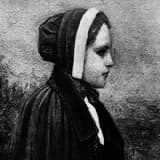
Bridget Bishop was hanged at Gallows Hill in Salem, Massachusetts, becoming the first person executed during the Salem witch trials.
On June 10, 1692, Bridget Bishop was led to Gallows Hill in Salem, Massachusetts Bay Colony, and hanged, becoming the first person executed in the Salem witch trials. She had been convicted just days earlier by the newly formed Court of Oyer and Terminer, a special tribunal assembled by Governor William Phips to handle the mounting accusations of witchcraft sweeping through Essex County.
Bishop was targeted in part because of her unconventional reputation: she ran taverns, wore distinctive clothing, and had previously faced (and been acquitted of) an earlier accusation of witchcraft in the 1670s. Witnesses at her 1692 trial offered lurid spectral evidence, claiming her apparition tormented them, and testified to finding poppets (small cloth dolls) in the walls of her former home — evidence that would be inadmissible by modern legal standards but was central to the court's reasoning.
Her execution set a horrifying precedent, opening the floodgates for the trials that would ultimately claim twenty lives before the hysteria ended in 1693. As the first to die, Bishop's case established the legal and procedural template — reliance on spectral evidence, swift trials, and public execution — that defined the entire episode. Her death remains one of the most studied moments in American colonial history, symbolizing the dangers of mass hysteria, religious extremism, and the failure of due process.