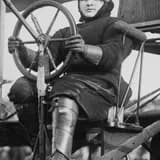
Scott sets a women’s long-distance flying record of 10 miles, showcasing endurance and control.
On July 30, 1911, Blanche Stuart Scott set a women’s long‑distance flying record of 10 miles.[1] Flying from a field in New York, she remained aloft over the course of the distance, demonstrating endurance and control that exceeded the brief exhibition hops typical of many early pilots, male and female.
This flight represented a significant step in women’s competitive aviation. At the time, records for endurance and distance were closely watched indicators of pilot skill and aircraft reliability. Scott’s 10‑mile mark showed that a woman aviator could safely manage an airplane over a sustained flight, countering stereotypes that women were too fragile or fearful for such tasks.
The record also helped elevate Scott’s standing within the exhibition circuit, giving promoters a concrete achievement to advertise and further justifying her billing as the "Tomboy of the Air." While she would soon surpass this distance herself with a 25‑mile and later a 60‑mile flight, the July 30 record is a documented milestone in the incremental expansion of women’s role in performance flying.
In the broader context of 1911, when aviation was still in its experimental phase and safety margins were thin, Scott’s willingness to push distance boundaries was particularly noteworthy. Her 10‑mile record contributed to a growing body of evidence that women could handle the physical strain and technical demands of sustained flight, helping to erode institutional resistance to women in the cockpit.