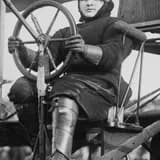
Scott performs a controlled flight at Hammondsport, credited as first formal piloting by a U.S. woman.
On September 6, 1910, just days after her initial hop, Blanche Stuart Scott made a more sustained and controlled flight at Hammondsport, New York.[2] Accounts describe her Curtiss biplane rising to around 40–150 feet, turning in the air, and landing safely, demonstrating that she could deliberately pilot the aircraft rather than simply ride out a brief lift.
This flight is often cited by aviation historians as the moment Scott became the first U.S. woman to pilot an airplane in a controlled demonstration, moving beyond accidental lift into purposeful flight.[2] In contrast to earlier, shorter hops, she exercised clear control over altitude and direction, meeting contemporary expectations for what constituted genuine piloting.
Her achievement came amid widespread skepticism about women’s participation in aviation. Glenn Curtiss had initially restricted her throttle over safety concerns, reflecting anxieties about a woman in the cockpit. Scott’s successful maneuvering thus served as a public rebuttal to those doubts and strengthened her case for joining the Curtiss Exhibition Team.
While historians still debate exact definitions of "first" in early aviation, this September 6 flight remains a landmark in women’s history. It signaled that an American woman could handle the technical and physical demands of controlled flying, helped normalize women’s presence in training fields and air meets, and paved the way for her subsequent public exhibition career as the celebrated "Tomboy of the Air."