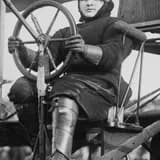
Scott makes a solo hop at Hammondsport, credited as the first solo airplane flight by an American woman.
On September 2, 1910, at Lake Keuka Field in Hammondsport, New York, Blanche Stuart Scott made a brief solo hop in a Curtiss biplane after receiving instruction from aviation pioneer Glenn Hammond Curtiss. Curtiss had tried to prevent her from flying by blocking the throttle, but a gust of wind lifted the aircraft into the air.
Scott reached a modest altitude before landing safely, yet this short flight is widely credited as the first solo airplane flight by an American woman.[12] Although some historians argue over "official" status and compare her achievement to that of Bessica Raiche, major aviation references and commemorative accounts mark September 2 as a pivotal moment when a U.S. woman first piloted an airplane alone.
At a time when professional aviators and manufacturers doubted women’s suitability for flying, Scott’s hop directly challenged gendered assumptions about courage, technical aptitude, and physical capacity. Curtiss himself reportedly had reservations about teaching a woman, underscoring how significant her presence in his training field was.
The event’s legacy extends beyond its brevity. It opened doors for Scott to join the Curtiss Exhibition Team and inspired later women aviators to believe that the cockpit was not reserved for men. Modern histories of early flight routinely cite this September 2 hop as a key barrier‑breaking milestone in American aviation, marking the moment when a woman first took sole control of an airplane in the United States.