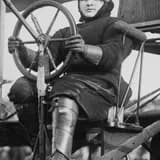
Scott completes her New York–San Francisco Overland car journey, an early coast-to-coast drive by a woman.
In July 1910, Blanche Stuart Scott completed her promotional automobile journey from New York to San Francisco, arriving on the Pacific coast after weeks on the road. Contemporary accounts and later biographies emphasize the difficulty of such a trip in the era before paved highways and standardized service stations.
Driving an Overland car, Scott and her companion traversed thousands of miles of variable terrain, from rutted rural roads to mountain passes. Her arrival in San Francisco marked one of the earliest coast‑to‑coast drives completed by a woman, though historians correctly note that Alice Huyler Ramsey had achieved a similar feat the previous year.
The journey’s completion was widely reported, framing Scott as a daring "autoist" who defied expectations that women lacked the stamina or mechanical savvy for such ventures. The publicity boosted the Overland brand and helped establish Scott’s reputation as an adventurer, directly leading to interest from aviation promoter Jerome Fanciulli and the Curtiss team.
In the wider context of 1910, when automobiles were still novelties and women’s public travel largely confined to chaperoned train journeys, Scott’s successful arrival in San Francisco symbolized a broader challenge to gendered limitations on movement. It demonstrated that women could independently navigate long distances, manage technology under stress, and capture public imagination—a foundation she would soon extend from roads to the sky.