← All women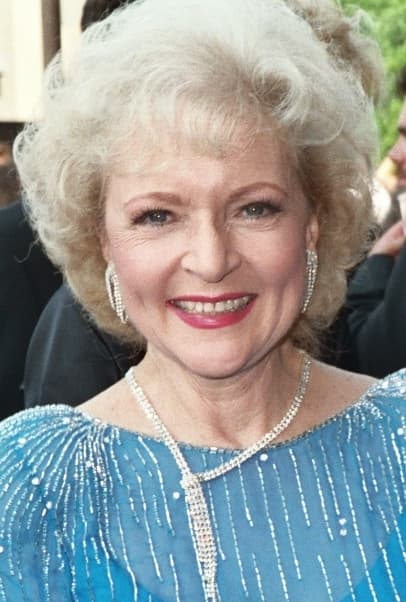
American · Arts
Betty White
January 17, 1922 – December 31, 2021
Early Life and Background
Betty Marion White was born on January 17, 1922, in Oak Park, Illinois, the only child of Horace Logan White, an electrical engineer and salesman, and Christine Tess ("Tess") White, a homemaker.[1][2][12] When she was a toddler, the family relocated to Los Angeles, California, seeking better economic prospects during the Great Depression and drawn in part by the growing entertainment industry.[1][2][10] Growing up in Beverly Hills, White attended Horace Mann School and Beverly Hills High School, where she developed a strong interest in performing and often appeared in school drama productions.[5]
White initially aspired to be a writer and even penned a school play in which she cast herself in the lead, an early sign of the self‑directed creative control she would later exercise in television.[1] Her upbringing in Los Angeles exposed her to the evolving medium of radio and early experiments in television, experiences that would shape her understanding of performance and technology.
During the late 1930s, while still very young, White appeared on an experimental television program in Los Angeles, singing songs from the operetta The Merry Widow with a classmate.[2][8] Scholars and journalists have suggested that this may make her one of the first women, and possibly the first, ever to appear on television, though only the year—not the exact date—is documented.[2] This appearance foreshadowed her lifelong relationship with the medium at a moment when television itself was still a technological curiosity.
Career Beginnings in Radio and Early Television
White’s formal entry into entertainment came through radio. After World War II, she worked on various radio programs, gradually building name recognition.[5][6] However, her decisive break into television occurred in 1949, when she landed a regular assignment on the live Los Angeles variety and talk program Hollywood on Television, hosted by Al Jarvis.[5][8] Initially hired as a "girl Friday"—a general assistant and occasional performer—White soon became co‑host, filling hours of live airtime each day with interviews, songs, and ad‑libbed conversation.[1][5]
Live local television in this period demanded stamina, quick thinking, and technical adaptability. White’s work on Hollywood on Television showcased her improvisational skills and camera ease, while also giving her a deep understanding of live production workflows. The exposure made her a familiar face in Southern California, setting up later opportunities in scripted series and national broadcasting.
Her role on the show led to a major milestone: at the 3rd Primetime Emmy Awards on March 25, 1951, White received a nomination for Best Actress in a Television Series, becoming the first woman ever to receive an Emmy nomination.[2] This recognition, for a locally produced program rather than a national network series, underscored both the artistic seriousness of her work and the emerging importance of television in American culture.
Founding Bandy Productions and Life with Elizabeth
By the early 1950s, White sought greater creative control over her work. In 1952 she and two male partners co‑founded the production company Bandy Productions to develop her own programming.[5] This made her one of the first women to co‑own a television production company, granting her authority not only as a performer but also as a producer and business decision‑maker.
Bandy Productions’ first major project was the syndicated sitcom Life with Elizabeth. Derived from sketches originated on Hollywood on Television, the series starred White as Elizabeth and Del Moore as her husband Alvin. The show began its run in 1953, and on October 7, 1953, it premiered in syndication, marking White as the first woman to produce a television sitcom in the United States.[1][5]
As both star and co‑producer, White wielded rare creative influence for a woman in early television. She helped shape storylines, comedic tone, and the portrayal of domestic life, presenting Elizabeth as playful, intelligent, and occasionally subversive. During its 1953–1955 run, Life with Elizabeth established White as a major comedic presence and an early example of a woman exercising control in front of and behind the camera.[3][8]
The series also earned her a regional Emmy (Los Angeles area) for her performance.[15] In women’s television history, Life with Elizabeth stands as a formative experiment in female‑driven sitcom production, demonstrating that audiences would respond positively to a show centered on a woman’s perspective when that woman had significant creative authority.
The Betty White Show and National Talk‑Variety Television
Building on her success in syndication, White moved into national daytime television. In 1954, she launched The Betty White Show on NBC, a daytime variety talk program that combined interviews, musical performances, and audience interaction.[1][11] The series premiered nationally on January 5, 1954, and White served as both host and producer, making her the first woman to produce a nationally televised TV show and widely regarded as the first woman to host a television talk show.[1][11]
White used her production authority to make substantive decisions about content and casting. One of the most historically notable aspects of the show was her inclusion of African American tap dancer Arthur Duncan as a regular performer. When some Southern television stations threatened to boycott the show unless she removed him, White refused, reportedly saying, "He stays. Live with it."[11] Her stance against racial discrimination on a national platform added a civil‑rights dimension to her pioneering role.
Although The Betty White Show faced logistical and scheduling challenges and did not run as long as some contemporaneous programs, it demonstrated that a woman could oversee national talk‑variety television, controlling both on‑air presentation and backstage production. In a period when daytime television was often dismissed and when female hosts were rare, White’s work expanded the range of roles available to women in broadcasting.
Mid‑Career Work and Honorary Mayor of Hollywood
Throughout the 1950s and 1960s, White maintained a busy schedule of guest appearances on game shows, variety programs, and scripted series. She became a familiar presence on panel shows such as Password and built friendships within the game‑show community, later earning the informal title "First Lady of Game Shows."[5]
In 1955, her rising prominence led to her being named honorary Mayor of Hollywood, a symbolic title reflecting her growing influence in the Los Angeles entertainment community.[12] Although the exact investiture date is not widely documented, the honor indicated that she was seen not only as a performer but also as a representative figure for Hollywood’s new television era.
During these years, White’s work continued to bridge radio, local television, and emerging national formats. She also hosted other iterations of The Betty White Show in later decades, including a 1950s daytime series and a 1970s NBC talk show, though these projects varied in longevity and format.[1] Each iteration contributed to her reputation as a versatile host capable of sustaining audience engagement across changing television styles.
The Mary Tyler Moore Show: Sue Ann Nivens
White achieved one of her most acclaimed roles in the 1970s with the CBS sitcom The Mary Tyler Moore Show. She joined the ensemble in 1973 as Sue Ann Nivens, the acerbic, flirtatious host of the fictional Happy Homemaker show, whose sugary on‑air persona masked ruthless competitiveness and sexual boldness.[5][15]
Her portrayal of Sue Ann ran until 1977 and won widespread critical praise for its layered, fearless comedy. White received Primetime Emmy Awards for Outstanding Continuing Performance by a Supporting Actress in a Comedy Series for the role in 1975 and 1976, reflecting industry recognition of her ability to steal scenes within a distinguished ensemble cast.[6]
The character of Sue Ann Nivens was significant in women’s television history because it complicated the image of the older female television personality. Rather than playing merely nurturing or ornamental roles, White’s Sue Ann was ambitious, sexual, and sometimes ruthless, challenging stereotypes about how women of her age could be depicted on screen. The role showcased her willingness to push boundaries and to embrace characters with sharp edges, contributing to the broader diversification of female representation in sitcoms.
The Golden Girls: Rose Nylund
In the mid‑1980s, White secured another iconic role in the NBC sitcom The Golden Girls, which aired from 1985 to 1992.[1][4] The series followed four older women—Rose Nylund (White), Dorothy Zbornak (Bea Arthur), Blanche Devereaux (Rue McClanahan), and Sophia Petrillo (Estelle Getty)—sharing a home in Miami.
White’s character, Rose Nylund, was a kind‑hearted, naive woman from the fictional town of St. Olaf, Minnesota. Through Rose, White explored issues of aging, friendship, grief, and sexuality with humor and vulnerability. The show tackled topics rarely addressed in mainstream television at the time, including menopause, ageism, health concerns, and LGBTQ+ themes, all framed through the experiences of older women.
The Golden Girls became an international hit, earning Emmy Awards and a devoted audience. White’s performance contributed significantly to the show’s success and helped redefine the cultural visibility of older women, demonstrating that they could be central, complex protagonists rather than peripheral figures. The series’ ongoing popularity in reruns and streaming solidified White’s status as a cross‑generational icon.
Game Shows, Hosting, and Emmy Milestones
Alongside her sitcom work, White maintained an extensive presence in game shows. She appeared frequently on programs such as Match Game, To Tell the Truth, What’s My Line?, and especially Password, which was hosted by Allen Ludden, whom she married.[1][5]
A major milestone came on June 30, 1983, when White won the Daytime Emmy Award for Outstanding Game Show Host for the NBC program Just Men! at the 10th Daytime Emmy Awards, making her the first woman to win this category.[5] The show’s format, which involved female contestants predicting choices made by a panel of male celebrities, relied heavily on White’s wit and rapport.
Throughout her career, she accumulated numerous Emmy nominations and wins. She received 21 Primetime Emmy nominations, winning five Primetime Emmys across performance categories, along with one competitive Daytime Emmy and a Los Angeles regional Emmy.[9][15] By 1996, she was recognized as the only woman to have won Emmy Awards in every comedic performance category, underscoring her versatility across lead, supporting, and variety roles.[2]
In 1995, White was inducted into the Television Hall of Fame, formalizing her status as one of the medium’s foundational figures.[14] She also received the Screen Actors Guild Life Achievement Award in 2010, and multiple American Comedy Awards, including a Lifetime Achievement Award in 1990.[14] These honors collectively mark her as not only a popular performer but also a respected architect of television comedy.
Later Career: Hot in Cleveland and Late‑Life Resurgence
White’s career experienced a notable resurgence in the late 2000s and 2010s. A widely viewed Super Bowl commercial and a successful Facebook campaign led to her hosting Saturday Night Live in 2010, where she delivered a celebrated performance and introduced herself to younger audiences.[1]
From 2010 to 2015, she starred as Elka Ostrovsky in the TV Land sitcom Hot in Cleveland, playing a sharp‑tongued caretaker who provided comic counterpoint to the show’s trio of leads.[1] The series further extended her record as a major presence in television comedy across multiple generations.
On September 5, 2013, Guinness World Records recognized White for having the longest TV career for a female entertainer, citing 74 years in the industry.[6] This record formalized the extraordinary span of her work, from experimental broadcasts in the 1930s through contemporary cable sitcoms.
Even as she aged into her nineties, White continued to appear in guest roles, voice acting, and documentary projects, demonstrating persistent professional commitment and cultural relevance.
Awards, Honors, and Recognition
Across her career, White amassed a broad array of honors. In addition to her Emmys and Hall of Fame induction, she received:
- The Screen Actors Guild Life Achievement Award, recognizing her body of work and professionalism.[14]
She was also celebrated by museums and institutions. The California Museum for History, Women and the Arts profiled her as a pioneering woman in television, highlighting her dual role as performer and producer and her animal‑welfare work.[5]
On September 17, 2018, the 70th Primetime Emmy Awards gave her a special on‑air tribute for over 80 years in the industry, underscoring her status as an enduring icon of television history.[6]
Personal Life
White’s personal life included three marriages. Her first marriage, to Dick Barker, a U.S. Army Air Corps pilot, was brief. She then married talent agent Lane Allen in the late 1940s; this marriage ended in divorce after Allen reportedly wanted her to give up her career.[9] Her third and most significant marriage was to Allen Ludden, the host of the game show Password, whom she married in 1963.[1][9]
White and Ludden had a close partnership that blended personal and professional life; she frequently appeared on his programs, and they were seen as one of television’s beloved couples. Ludden died in 1981, and White never remarried, later saying he was the love of her life.[1][9]
White did not have biological children but was stepmother to Ludden’s three children from his previous marriage.[9] Her decision to prioritize career and step‑parenting over motherhood reflected both personal choice and the demands of her professional life.
Outside of entertainment, White was deeply committed to animal welfare. She served for decades on the boards of the Morris Animal Foundation and the Greater Los Angeles Zoo Association, donated generously to animal‑related causes, and used her public profile to advocate for humane treatment of animals.[5] This activism became a core part of her public identity, complementing her reputation as a comedic performer.
Legacy and Historical Impact
Betty White’s legacy is multifaceted. As an actress and comedian, she created characters—Sue Ann Nivens and Rose Nylund among them—that helped reshape perceptions of older women on television, portraying them as complex, sexual, and emotionally rich rather than marginal or invisible.[1][4][15]
As a producer and business partner, she stood among the earliest women to co‑own a television production company and to produce both a sitcom and a nationally televised talk‑variety show.[1][5][11] These roles challenged the male‑dominated power structures of early television and demonstrated that women could exercise sustained creative control.
Her career also illustrates the evolution of television as a medium. Beginning in experimental broadcasts in the 1930s, moving through live local programming, network sitcoms, game‑show hosting, cable television, and late‑career viral fame, White’s trajectory parallels technological and cultural shifts, making her a living archive of television history until her death.
In women’s history, White is a key figure for understanding how individual persistence, versatility, and strategic use of emerging formats can gradually erode gender barriers. Her Emmy milestones, Guinness record, and institutional honors collectively testify to the long arc of recognition for women’s contributions to entertainment.
Beyond industry metrics, White left a softer legacy in public affection. She was widely celebrated for her kindness, professionalism, and ability to bridge generations with humor. Her animal‑welfare advocacy and late‑life popularity on social media further cemented her image as both a nostalgic figure and a contemporary cultural presence.
Later Life and Death
In her later years, White continued to live in Los Angeles, remaining active in selected projects and public appearances. She gave interviews reflecting on her early career, her work with animals, and her gratitude for sustained audience support.[1][6]
On December 31, 2021, White died at her home in the Brentwood neighborhood of Los Angeles, California, at the age of 99.[1][2][10] According to reports, she had suffered a stroke several days earlier, and her death certificate listed cerebrovascular accident as a contributing factor.[9]
Her passing, just weeks before her 100th birthday, prompted global media coverage and tributes from fans and colleagues. Obituaries emphasized her status as a "television pioneer" and "Golden Girl" whose career spanned nearly the entire history of the medium.[1][2][15] Plans for nationwide celebrations of her centennial transformed into memorials of her life and work.
White’s death marked the end of one of the longest documented careers in television and closed a chapter on an era when performers like her shaped the medium from its earliest days. Yet her influence persists in reruns, streaming platforms, institutional recognitions, and the continued cultural resonance of the characters she brought to life.
Dated achievements
8 indexed.
- Jan171922Arts
Birth of Betty White
Betty Marion White was born in Oak Park, Illinois, later becoming one of the most influential women in American television history.
View details Betty White - Wikipedia - Mar251951Arts
First woman ever nominated for an Emmy Award
Betty White became the first woman to receive an Emmy nomination, for Best Actress in a Television Series for 'Hollywood on Television.'