← All women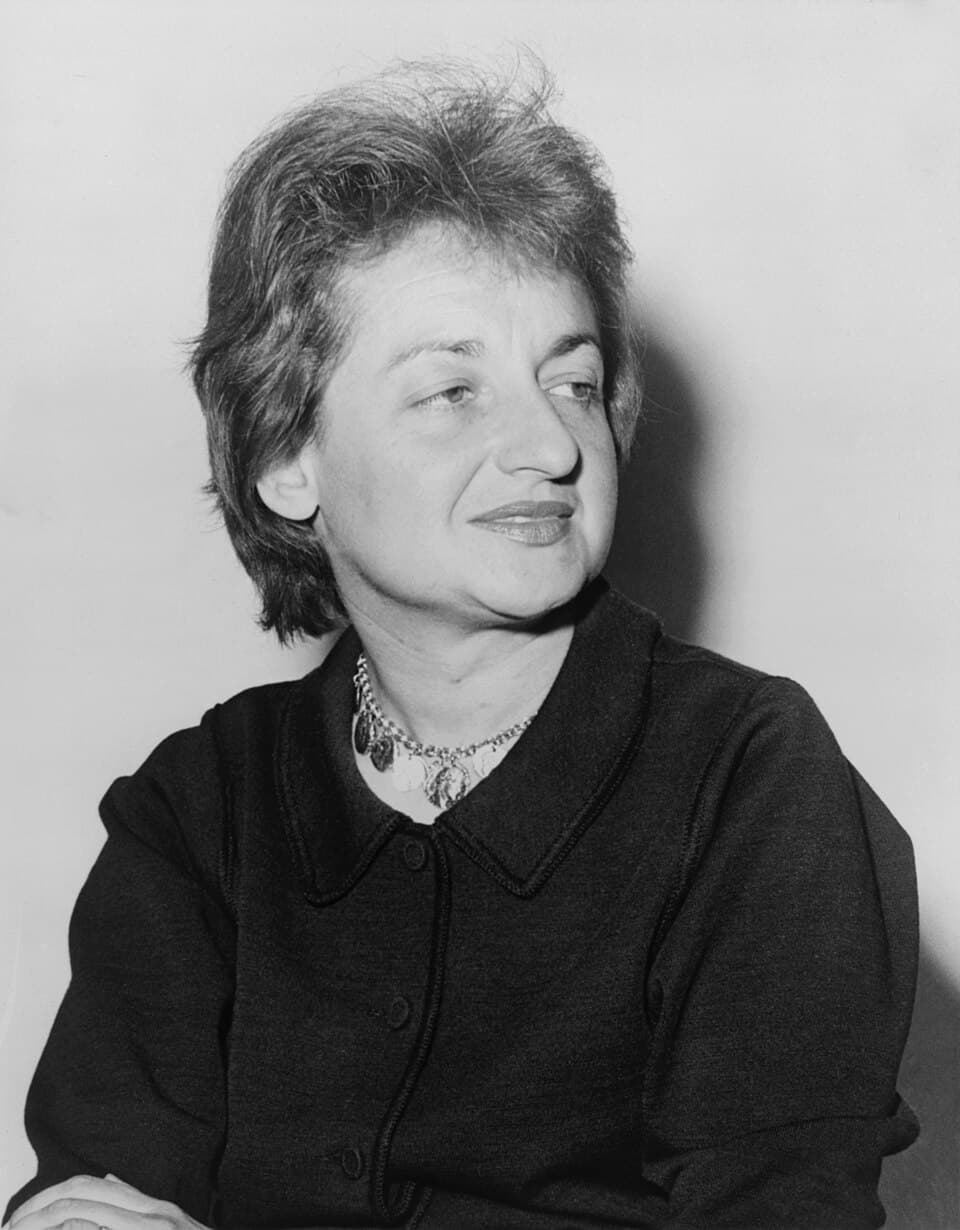
American · Activism · Literature
Betty Friedan
February 4, 1921 – February 4, 2006
Early Life and Background
Bettye Naomi Goldstein, later known as Betty Friedan, was born on February 4, 1921, in Peoria, Illinois, the eldest of three children of Harry Goldstein, a Russian Jewish immigrant and jeweler, and Miriam Horowitz Goldstein, a Hungarian Jewish immigrant who had worked as a local newspaper reporter before becoming a homemaker.[1][2][8][9] Raised in a middle‑class Jewish household, Friedan experienced both the security and the constraints of small‑city Midwestern life.
Her mother’s earlier career in journalism and later frustration with domestic confinement deeply influenced Friedan’s perception of women’s curtailed ambitions.[1][10] The family’s expectations and conflicts around Bettye’s own intellectual gifts and independence would later inform her analysis of "the problem that has no name"—the widespread unhappiness of women restricted to housewifery in postwar America.
Friedan excelled academically at Peoria Central High School, graduating in June 1938 as one of five valedictorians.[8] She then attended Smith College, a leading women’s institution, where she majored in psychology and graduated summa cum laude in 1942.[1][2][8][12] At Smith, she studied under influential psychologists and became interested in the ways Freudian and social-scientific theories depicted women’s nature and roles, laying groundwork for her later critiques.
After Smith, Friedan spent a year in graduate study in psychology at the University of California, Berkeley, but she did not complete a doctorate.[2][8] Her father’s death in 1943 prompted her move to New York City, where she shifted from academic aspirations toward journalism and political engagement.[8]
Career Beginnings and Labor Journalism
In the early 1940s, Friedan worked as a reporter for the Federated Press, a left-wing news service covering labor and progressive politics.[2][3][8][12] This experience immersed her in trade union struggles, class dynamics, and the politics of social reform. She reported on workers’ issues and learned how to translate complex political debates into accessible prose.
By 1947, Friedan had become a writer for the newspaper of the United Electrical, Radio and Machine Workers of America (UE), a major left‑leaning union.[2][8] There she wrote about working women, union activism, and economic justice, further sharpening her understanding of how gender intersected with labor and class. The UE’s political environment—shaped by New Deal radicalism and later Cold War pressures—exposed her to conflicts over communism and liberalism that would later influence her views on movement strategy.
Friedan’s labor journalism career ended when she was let go after a second pregnancy, a dismissal she linked to her status as a married woman and mother.[10][12] This personal experience of workforce exclusion underscored the vulnerability of women workers and became part of the empirical basis for her later feminist critiques of employment discrimination.
Marriage, Family, and the Suburban Context
In June 1947, Friedan married Carl Friedan, an advertising executive and theatre director.[2][8] The couple had three children: Daniel Friedan (born 1948), Jonathon Friedan (born 1952), and Emily Friedan (born 1956).[8] During the 1950s, the family lived in suburban settings while Carl pursued his career.
Like many educated women of her generation, Friedan left full‑time paid work and took on the role of housewife and mother.<1][10][12> She supplemented the household income and maintained her intellectual engagement through freelance magazine writing for outlets such as women’s and parenting magazines, often under constraints that required a conformist tone about domestic life.
The dissonance between Friedan’s education and ambitions and the cultural ideal of the contented suburban homemaker sharpened her sense of personal and collective frustration. She later described how her own dissatisfaction, and that of her peers, contrasted sharply with the postwar media portrayal of feminine fulfillment as centered exclusively on marriage, children, and consumption.[2][4][10]
Genesis of The Feminine Mystique
In 1957, Friedan conducted a survey of her Smith College classmates for a reunion questionnaire, asking about their lives, work, and satisfaction.[1][2][12] She discovered that many women who had been talented students and had initially pursued careers now felt unfulfilled, bored, or depressed in their roles as full‑time homemakers, despite material comfort.
This informal research prompted Friedan to investigate further. She broadened her inquiries, consulted psychological literature, and examined articles in women’s magazines, where she traced a shift from prewar representations of ambitious, independent heroines to postwar stories glorifying domesticity.[2][4][10] Over several years, she developed a critique of what she termed the "feminine mystique"—the cultural narrative that defined women’s identity entirely through marriage and motherhood.
Friedan’s manuscript, based on these investigations and her own experience, was eventually accepted by W.W. Norton. On February 19, 1963, The Feminine Mystique was published and rapidly became a bestseller.[3][4][6] The book articulated "the problem that has no name": the widespread, unnamed dissatisfaction among women who had been told that domesticity alone would provide complete fulfillment.
Impact of The Feminine Mystique
The Feminine Mystique combined sociological observation, psychological critique, and persuasive rhetoric to challenge dominant assumptions about womanhood. Friedan argued that postwar culture, influenced by misinterpretations of Freudian theory and functionalist social science, had pathologized women’s ambition and intellectual interests, pushing them into "sexual sell" and domestic consumerism.[2][4][10]
She insisted that women needed meaningful work, education, and participation in public life to realize their capacities, and she likened the enforced domesticity of white middle‑class housewives to a "comfortable concentration camp." Her arguments resonated widely, especially among educated suburban women, and the book sold millions of copies over the decade.[1][2][4][10]
Although The Feminine Mystique focused largely on white, middle‑class women and was criticized for neglecting the experiences of working‑class women and women of color, it played a pivotal role in sparking second‑wave feminism in the United States.[2][4][9][12] The work helped move feminist discourse beyond suffrage and legal rights to questions of identity, sexuality, family, and everyday life, and it catalyzed consciousness‑raising discussions in households and campuses across the country.
Founding the National Organization for Women (NOW)
By the mid‑1960s, Friedan had become a prominent public figure, writing, lecturing, and appearing in media discussions about women’s roles. Frustrated by the slow pace of federal enforcement of Title VII of the Civil Rights Act, especially regarding sex discrimination, she joined a group of activists in 1966 to create a new national organization.[2][4][6][8]
On October 29, 1966, Friedan and others formally founded the National Organization for Women (NOW), drafting a statement of purpose that called for women to be brought "into the mainstream of American society" in fully equal partnership with men.[3][4][6][8] Friedan was elected NOW’s first president, serving from 1966 to 1970.[2][3][6]
Under her leadership, NOW focused on enforcing anti‑discrimination provisions in employment, challenging sex‑segregated job advertisements, advocating for equal pay, and pressing for childcare and reproductive rights.[2][4][6][12] Friedan envisioned NOW as an "NAACP for women," using legal strategies, lobbying, and public campaigns to make feminist demands part of mainstream political debate.
Her work with NOW linked the consciousness‑raising impact of The Feminine Mystique to institutional activism. The organization rapidly grew, establishing chapters across the United States and becoming a central vehicle for second‑wave feminist efforts in the late 1960s and 1970s.[2][4][6]
Movement Organizing and Public Actions
Friedan played key roles in organizing high‑profile feminist actions. She helped convene the Women’s Strike for Equality in 1970, a nationwide demonstration on the 50th anniversary of women’s suffrage that demanded equal opportunities in employment and education, free abortion on demand, and childcare.[2][6][12] The strike drew significant media attention and illustrated the breadth of feminist concerns beyond voting rights.
In 1969, she co‑founded NARAL (originally the National Association for the Repeal of Abortion Laws), contributing to a coordinated national campaign to liberalize abortion laws.[14][2] In 1971, she helped establish the National Women’s Political Caucus, which aimed to increase women’s participation and representation in electoral politics and public office.[14][2]
Friedan also engaged in symbolic protests against everyday discrimination. On February 12, 1969, she led a demonstration by about thirty women at New York’s Plaza Hotel Oak Room, confronting its policy excluding women from weekday lunch service.[14] Two days later, on February 14, 1969, she participated in a widely reported public debate on feminism that highlighted the movement’s growing visibility and the contentious reception of its demands.[14]
These activities showcased Friedan’s ability to blend intellectual critique with practical organizing and media strategy. She sought to make feminism understandable and compelling to a broad public, even as internal disagreements about tactics and ideological priorities emerged within the movement.
Major Works Beyond The Feminine Mystique
Friedan continued to write influential books that reflected shifts in feminist debates and her own thinking. In 1976, she published It Changed My Life: Writings on the Women’s Movement, a collection of essays, speeches, and articles documenting the evolution of the movement and her role within it.[2][8] The book provided historical insight into the tumultuous early years of second‑wave feminism.
In 1981, she released The Second Stage, in which she argued that feminism had entered a new phase. She contended that after winning important legal and workplace rights, the movement needed to focus on integrating these gains with family life, emotional needs, and a revaluation of caregiving.[2][3][8][9] The book was both influential and controversial, as some feminists criticized Friedan’s emphasis on reconciling career and family as insufficiently radical.
Friedan later turned her attention to aging. In 1987, she published The Fountain of Age, a substantial work examining cultural attitudes toward aging, the potential for creativity and productivity in later life, and the specific challenges older women face.[2][3][8] The book sought to challenge stereotypes of decline and dependency, extending her longstanding interest in how social narratives shape identity.
In 1993, she published Beyond Gender: The New Politics of Work and Family, analyzing how changing work patterns, family structures, and policy needs required new frameworks beyond traditional gender roles.[2][3] Late in life, she also produced a memoir, Life So Far (2000), reflecting on her complicated personal history and the contentious dynamics of the feminist movement.[9][10]
Awards, Honors, and Academic Engagement
Throughout her career, Friedan received numerous honors recognizing her influence on feminism and American culture. While individual award dates vary, major biographical sources note that she was widely celebrated as the author whose work "sparked the modern American feminist movement" and as a "pioneer" of women’s rights.[4][9][12]
Friedan held visiting academic positions at institutions such as Temple University, Yale University, Queens College, and Columbia University, where she lectured on women’s issues, social change, and public policy.[6] These roles allowed her to shape generations of students and scholars and to engage with emerging feminist theory.
She also participated in international forums, including serving as head of an unofficial NOW delegation to the United Nations World Conference on Women in Nairobi, Kenya, in 1985.[8][10] Her engagement with global women’s rights and interest in the status of women in Israel reflected her concern with transnational feminist issues as well as her secular Jewish background.[10]
Personal Life and Controversies
Friedan’s marriage to Carl Friedan was marked by tension; the couple divorced in 1969.[2][8] Later accounts, including interviews and secondary analyses, suggest that the relationship involved conflict and, by some reports, physical abuse, though interpretations differ and Friedan herself addressed these matters selectively.[10][12] Her experience of marital stress and traditional gender expectations informed her critiques of the nuclear family model of the postwar era.
As a mother of three, Friedan wrestled with balancing activism, writing, and childcare, a struggle reflected in her later writings on the "second stage" of feminism. She argued that the movement needed to recognize the value of family and caregiving while ensuring that such responsibilities did not limit women’s autonomy or opportunities.[2][3][8]
Friedan was often a polarizing figure. Some feminists criticized her for focusing heavily on the problems of white, middle‑class women, and for what they saw as insufficient attention to race, class, and sexuality.[10][12] She expressed ambivalence about some strands of feminist activism, especially those she perceived as centering lesbian identity or radical separatism, and she sometimes clashed publicly with other leaders.
These controversies highlight the complexities of the movement and Friedan’s role within it: she was both a crucial catalyst for change and a figure whose perspectives were contested as feminism diversified and evolved.
Legacy and Historical Impact
Betty Friedan is widely regarded as one of the central figures of second‑wave feminism in the United States.[2][4][9][12] Her 1963 book The Feminine Mystique gave language to a diffuse sense of discontent among women and helped legitimize the idea that personal frustration could be understood as a structural, political issue.
Through her founding and leadership of NOW and participation in organizations like NARAL and the National Women’s Political Caucus, Friedan helped institutionalize feminist activism, connecting grassroots organizing to national legal and policy campaigns.[2][4][6][8] Her strategies contributed to major changes in employment practices, education policies, reproductive rights debates, and public discourse about gender.
Friedan’s later writings, including The Second Stage, The Fountain of Age, and Beyond Gender, extended feminist analysis to questions of life course, aging, and new forms of work and family. While not as widely celebrated as The Feminine Mystique, these works reflect her effort to adapt feminist thought to changing social realities and to address issues that would become increasingly salient in late‑20th‑century societies.[2][3][8]
Historians and feminist scholars note both her achievements and limitations. Her focus on white, middle‑class women and her contentious relations with some feminist factions have been subjects of critique, yet even these debates testify to her centrality in the movement’s history.[10][12] Friedan’s work helped open space for more intersectional and diverse feminist perspectives by making gender inequality visible and contestable in mainstream culture.
Later Life and Death
In her later years, Friedan continued to write, lecture, and participate in public discussions of feminism, family, and social policy. She remained active in debates over the Equal Rights Amendment and the politics of work and family, and she engaged with questions about the future of the women’s movement as new generations of activists emerged.[2][3][6]
Friedan also increasingly focused on aging, both intellectually and personally, arguing that later life could be a period of renewed creativity and engagement rather than inevitable decline, and that older women in particular faced distinctive forms of marginalization that needed to be challenged.[2][3][8]
On February 4, 2006, Betty Friedan died of congestive heart failure in Washington, D.C., at the age of eighty‑five—on her birthday.[2][4][12] Obituaries and retrospectives described her as a "mother" of second‑wave feminism, a groundbreaking author, and a founder of key feminist organizations, while also acknowledging the contested aspects of her legacy.
Her death marked the close of a life that had helped reshape expectations for millions of women and had altered the intellectual and political landscape of gender in the United States. The institutions she helped build, and the questions she raised about fulfillment, work, family, and identity, continue to inform feminist scholarship and activism in the 21st century.
Dated achievements
7 indexed.
- Feb041921Activism
Birth of Betty Friedan
Betty Friedan was born in Peoria, Illinois.
View details Wikipedia - Betty Friedan - Feb191963Literature
Publication of 'The Feminine Mystique'
Friedan’s 'The Feminine Mystique' was published, sparking the second wave of feminism.
View details