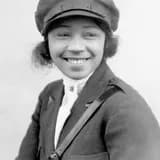
Coleman became the first African American woman and first Native American woman to earn a pilot's license, issued by the FAI in France (license no. 18310).
On June 15, 1921, Bessie Coleman achieved a landmark victory in aviation history when the Fédération Aéronautique Internationale (FAI) in France granted her pilot's license number 18310. This made her the first African American woman and the first Native American woman to earn a pilot's license anywhere in the world, and the first American woman of any background to hold an international pilot's license issued directly by the FAI.
Barred from flight schools in the United States because of both her race and her gender, Coleman had traveled to France after being encouraged by Robert S. Abbott, publisher of the Chicago Defender, who recognized her determination and helped fund her journey. She studied at the Caudron Brothers' School of Aviation in Le Crotoy, learning to fly a Nieuport Type 82 biplane under instructors who had trained French World War I pilots.
Earning this license required mastering complex maneuvers, including tailspins and loops, in an era when aviation itself was still a dangerous and experimental pursuit. Coleman's achievement was covered by newspapers and celebrated within the African American community as a powerful symbol of what was possible despite entrenched racial and gender barriers.
Her license became the foundation for a career as a barnstorming exhibition flyer, and her achievement remains one of the most cited milestones in the history of aviation and civil rights, inspiring generations of pilots who followed in her path.