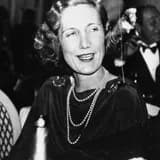
On September 4–5, 1936, Markham became the first person to fly solo nonstop across the Atlantic from east to west, landing in Nova Scotia.
On September 4, 1936, Beryl Markham took off from Abingdon, England, in her Vega Gull monoplane named The Messenger, attempting a feat no aviator had yet accomplished: a solo, nonstop flight across the Atlantic Ocean flying east to west, against the prevailing headwinds — a far more difficult challenge than the west-to-east crossings pioneered by aviators like Amelia Earhart.
After nearly 20 hours battling fog, icing, and fuel-line problems, Markham's aircraft ran out of fuel and she crash-landed in a peat bog at Baleine Cove on Cape Breton Island, Nova Scotia, on September 5, 1936. Though she did not reach her intended destination of New York City, she had successfully crossed the entire ocean — becoming the first person, man or woman, to fly solo nonstop across the Atlantic from England to North America.
The flight instantly made her an international celebrity, with newspapers around the world hailing her courage. It cemented her reputation as one of the era's most daring aviators, following in the footsteps of pioneering African bush pilots and preceding her own literary fame. The achievement remains a landmark in aviation history, symbolizing the era's fascination with solo long-distance flight and women's expanding role in pushing its limits.