← All women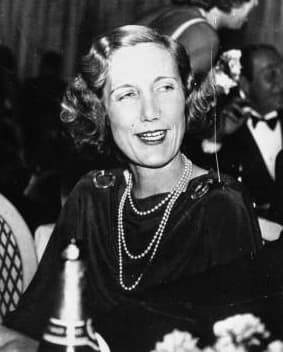
British, Kenyan · Aviation · Literature · Sports · Exploration
Beryl Markham
October 4, 1902 – August 3, 1986
Early Life and Background
Beryl Markham was born Beryl Clutterbuck on October 4, 1902, in the small village of Ashwell, in Leicestershire (now part of Rutland), England. She was the daughter of Charles Baldwin Clutterbuck, a farmer, engineer, and horse trainer, and Clara Agnes Alexander. In 1904, when Beryl was not yet two years old, her father relocated the family to British East Africa — present-day Kenya — to establish a farm at Njoro in the Great Rift Valley, drawn by the promise of land and opportunity in the British colonial frontier.
Shortly after the move, Beryl's mother, unable to adapt to the hardships of colonial farm life, returned to England with Beryl's older brother, leaving young Beryl to be raised primarily by her father on the isolated farm. This decision would profoundly shape the rest of her life. Growing up largely without her mother, Beryl spent much of her childhood alongside local Kipsigis and Nandi boys, learning to hunt with spears, track wild game, and speak Swahili and other local languages fluently. She was given little formal education in a traditional sense, though she was tutored intermittently, and she developed a fierce independence, physical courage, and comfort in wild, untamed landscapes that set her apart from most European women of her era.
Her father's farm doubled as a stables and horse-training operation, and Beryl was immersed from childhood in the world of thoroughbred breeding and racing. She learned to ride and handle horses skillfully under her father's tutelage, setting the stage for her first career.
Career Beginnings: Horse Training
When financial difficulties forced her father to leave Kenya in the early 1920s, Beryl — still a teenager — chose to remain behind rather than return to England. She married her first husband, Alexander Laidlaw "Jock" Purves, in 1919 at the age of 16, though the marriage was brief and troubled. Determined to support herself, she turned to the skills she had learned from her father and became a licensed racehorse trainer, one of the very first women in Africa — and possibly the world — to be officially licensed in the profession.
Working out of Molo and later Nairobi, Markham built a formidable reputation training winning racehorses for the colonial elite of Kenya, competing successfully against established male trainers in a fiercely competitive, male-dominated field. Her horses won several major East African races, and by her mid-twenties she was recognized as one of the colony's most skilled trainers, an extraordinary achievement for a woman in the 1920s colonial world.
During these years, Markham moved within the elite social circles of British East Africa's "Happy Valley" set, befriending figures such as Karen Blixen (the Danish author who would later write Out of Africa under the pen name Isak Dinesen) and Blixen's lover, the big-game hunter and aviator Denys Finch Hatton. Finch Hatton, in particular, introduced Markham to aviation, an encounter that would redirect the course of her life.
Transition to Aviation
In the early 1930s, inspired partly by Finch Hatton's use of aircraft for scouting game and partly by her own restless ambition, Markham took up flying. She trained under Tom Campbell Black, a pioneering aviator in Kenya, and earned her pilot's license in 1931. She quickly progressed from amateur enthusiasm to professional aviation, becoming one of the first women in Kenya to hold a commercial pilot's license.
She worked as a bush pilot, ferrying mail, supplies, and passengers across the vast, often perilous terrain of East Africa, and famously worked scouting elephant herds from the air for safari hunters — a novel and dangerous application of aviation technology at the time. This work demanded exceptional navigational skill, as pilots flew over uncharted bush without reliable maps or instruments, often landing on improvised airstrips.
The Historic Transatlantic Flight
Markham's aviation career reached its zenith on September 4–5, 1936, when she undertook one of the most daring flights of the era: a solo, nonstop crossing of the Atlantic Ocean from England to North America, flying east to west. This route was significantly more difficult than the more commonly attempted west-to-east crossings (as flown by Charles Lindbergh and Amelia Earhart), because pilots flying east to west had to fight against the prevailing headwinds and jet stream, requiring far more fuel and endurance.
Flying a Percival Vega Gull monoplane she named The Messenger, Markham departed from Abingdon, England, on September 4, 1936, intending to reach New York City. She battled treacherous weather conditions throughout the approximately 20-hour flight, including thick fog and icing that clogged her fuel lines. As her fuel supply became critical, she was forced to make a crash landing in a peat bog at Baleine Cove on Cape Breton Island, Nova Scotia, on September 5, 1936.
Although she did not reach her intended destination, Markham had accomplished the historic feat of becoming the first person — man or woman — to fly solo nonstop across the Atlantic from England to North America. The flight garnered international headlines and made her instantly famous, drawing comparisons to Amelia Earhart and cementing her place in aviation history alongside the greatest pioneers of transatlantic flight.
Literary Career and "West with the Night"
Following her aviation triumph, Markham eventually turned to writing, drawing on her extraordinary life experiences in colonial Kenya. With editorial assistance — the extent and nature of which has been the subject of considerable historical debate — from her third husband, writer Raoul Schumacher, and possibly influenced by her friendship with Ernest Hemingway, Markham published her memoir West with the Night in 1942.
The book recounted her childhood in Kenya, her career as a racehorse trainer, her aviation exploits including the transatlantic flight, and vivid, lyrical depictions of the African landscape and its wildlife. Critics praised its evocative prose; Ernest Hemingway, in a private letter, remarked that Markham "can write rings around all of us who consider ourselves writers," praising the book highly despite his generally critical view of her personal character.
Despite this praise, the book sold modestly upon its initial release and fell out of print for decades. Markham herself moved on to other pursuits, and the memoir was largely forgotten by the reading public until its remarkable rediscovery and republication in 1983, more than forty years after its initial release. This rerelease became a bestseller and introduced Markham's remarkable life story to a new generation, cementing West with the Night as a classic of African adventure literature and travel writing.
Personal Life
Markham's personal life was as unconventional and dramatic as her professional pursuits. She married three times: first to Alexander "Jock" Purves in 1919 (divorced 1922), then to Sir Mansfield Markham in 1927, from whom she took the surname by which she became famous (divorced 1942), and finally to writer Raoul Schumacher in 1942 (divorced 1960). She had one son, Gervase Markham, born in 1929 during her marriage to Mansfield Markham, though she had little involvement in raising him; he was largely raised by his father's family in England.
Markham had numerous romantic relationships throughout her life, including with Denys Finch Hatton and reportedly with Prince Henry, Duke of Gloucester, a son of King George V — a relationship that reportedly caused a minor scandal within royal circles. Her personal life was marked by fierce independence and a refusal to conform to the domestic expectations placed on women of her era, choices that drew both admiration and censure from contemporaries.
Later Life, Legacy, and Death
After her aviation fame and the initial modest reception of her memoir, Markham spent subsequent decades in relative obscurity, living at various points in England, the United States, and finally returning permanently to Kenya, where she resumed horse training with considerable success into her seventies, training winners of the Kenya Derby multiple times.
The 1983 republication of West with the Night brought her renewed fame and financial support in her final years, as royalties and admirers helped sustain her modest lifestyle near the Nairobi racecourse. She died in Nairobi, Kenya, on August 3, 1986, at the age of 83, and was buried at Langata Cemetery in Nairobi.
Beryl Markham's legacy endures across multiple fields: as a pioneering female aviator whose transatlantic flight remains a landmark achievement in aviation history; as one of the first licensed female racehorse trainers in the world; and as an author whose lyrical prose in West with the Night continues to be celebrated as one of the finest works of African travel writing and memoir. Her life embodies the fierce, boundary-breaking spirit of women who refused to accept the limitations placed on them by the conventions of their time, forging extraordinary paths across horse racing, aviation, and literature in a era when few women were permitted entry into any of these fields, let alone all three.
Dated achievements
3 indexed.
- Oct041902Science
Born in Leicestershire, England
Beryl Markham (née Clutterbuck) was born on October 4, 1902, in Ashwell, Rutland (then Leicestershire), England.
View details - Sep041936Aviation
First person to fly solo nonstop across the Atlantic from England to North America (east-to-west)
On September 4–5, 1936, Markham became the first person to fly solo nonstop across the Atlantic from east to west, landing in Nova Scotia.
View details