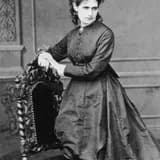
Morisot joined the inaugural Impressionist exhibition in Paris on April 15, 1874, becoming the only woman among the group's founding exhibitors.
On April 15, 1874, the first independent exhibition of what would become known as the Impressionists opened at the studio of photographer Nadar on the Boulevard des Capucines in Paris. Berthe Morisot was one of the founding participants, exhibiting alongside Claude Monet, Edgar Degas, Pierre-Auguste Renoir, Camille Pissarro, and Alfred Sisley — and she was the only woman among this pioneering circle of artists rejecting the conservative jury system of the official Paris Salon.
This exhibition, organized under the name Société Anonyme des Artistes, Peintres, Sculpteurs, Graveurs, was a radical act of institutional defiance. The participating artists sought an alternative venue after being repeatedly excluded or marginalized by the Salon's traditionalist standards. Morisot's inclusion signified not only her artistic legitimacy among these men but also an extraordinary breach of gender norms in a field where women were largely relegated to decorative or amateur status.
Morisot exhibited several works, including The Cradle (Le Berceau), which today is considered one of her masterpieces and a defining image of maternal intimacy rendered with Impressionist technique. Her participation in this and subsequent Impressionist exhibitions (she took part in seven of the eight held between 1874 and 1886, missing only the 1879 exhibition due to the birth of her daughter) cemented her role as a central, rather than peripheral, figure of the movement, challenging the era's assumptions about women's capacity for serious artistic innovation.