← All women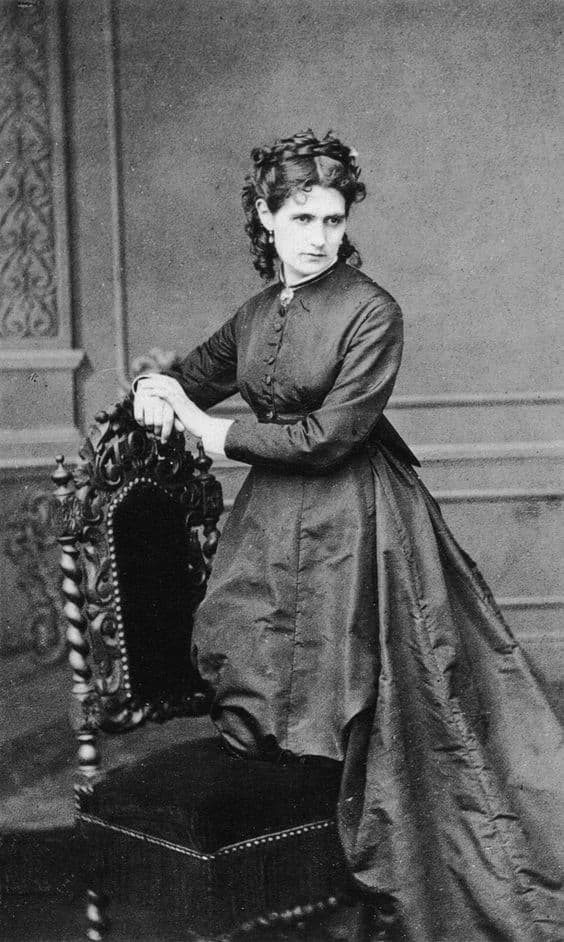
French · Arts
Berthe Morisot
January 14, 1841 – March 2, 1895
Early Life and Background
Berthe Marie Pauline Morisot was born on January 14, 1841, in Bourges, in the Cher département of central France. She was the third of four children born to Edmé Tiburce Morisot, a high-ranking government prefect, and Marie-Joséphine-Cornélie Thomas, who came from a family with connections to the arts — she was a great-niece of the eighteenth-century painter Jean-Honoré Fragonard. The family's comfortable bourgeois status and cultured background afforded Berthe and her sisters, Yves and Edma, opportunities for artistic education that were unusual, though not unheard of, for young women of their class in mid-nineteenth-century France.
The Morisot family relocated to Paris in the early 1850s, where Berthe's father held a post at the Cour des Comptes. As was customary among affluent families, the daughters were given drawing lessons, initially regarded as a genteel accomplishment rather than a serious vocation. However, Berthe and Edma displayed unusual talent and dedication, prompting their parents — particularly their mother — to arrange more rigorous instruction. The sisters studied first under Geoffroy-Alphonse Chocarne and then under the more demanding academic painter Joseph Guichard, who reportedly warned their mother that such serious training might lead the girls toward a "revolutionary" path in art, an ironic prophecy given Berthe's later role in the Impressionist movement.
Artistic Training and Formative Influences
Since women were barred from enrolling at the official École des Beaux-Arts, Morisot and her sister pursued alternative avenues of training, including copying works at the Louvre — a common practice for aspiring painters, especially women excluded from formal academic study. It was during these sessions that Berthe met the landscape painter Camille Corot, who became an important mentor, encouraging her toward plein-air (outdoor) painting techniques that would later become central to Impressionism.
Morisot made her debut at the official Paris Salon in 1864, exhibiting landscape paintings, and continued to show work there periodically through the late 1860s and early 1870s. During this period, she became closely acquainted with Édouard Manet, whom she met around 1868. Manet was deeply impressed by her talent and repeatedly asked her to model for his paintings, including his celebrated work The Balcony (1868–69), in which Morisot appears. The relationship between the two was intellectually and artistically significant; Manet's influence is evident in Morisot's evolving technique, while she in turn encouraged him toward brighter palettes and looser brushwork characteristic of the emerging Impressionist style.
Career Development and the Impressionist Movement
By the early 1870s, Morisot had grown dissatisfied with the rigid conservatism of the Salon jury system, which often rejected or marginalized innovative work. In 1874, she joined a group of like-minded artists — including Claude Monet, Edgar Degas, Pierre-Auguste Renoir, Camille Pissarro, and Alfred Sisley — in organizing an independent exhibition free from academic jurors. This exhibition, held at the studio of the photographer Nadar on the Boulevard des Capucines and opening on April 15, 1874, is now recognized as the first Impressionist exhibition. Morisot was the only woman among the founding exhibitors, a remarkable distinction given the pervasive gender barriers of the era that discouraged women from professional artistic ambition.
Morisot went on to participate in seven of the eight Impressionist exhibitions held between 1874 and 1886, missing only the 1879 exhibition due to the birth of her daughter, Julie. Her contributions were consistently well received by critics and peers alike, and she quickly became recognized as one of the movement's most technically skilled painters, admired for her fluid, feathery brushwork and her mastery of light and color, particularly in watercolor and pastel media.
Major Works and Artistic Style
Morisot's oeuvre is distinguished by its focus on domestic and private life — scenes of women reading, sewing, tending to children, or relaxing in gardens and interiors. This thematic focus was partly a reflection of the social constraints placed on women of her class, who had limited access to public spaces for painting (such as cafés, theaters, and street scenes commonly depicted by her male colleagues), but she transformed these constraints into a distinctive artistic vision celebrated for its intimacy and psychological depth.
Among her most celebrated works is The Cradle (Le Berceau, 1872), depicting her sister Edma gazing at her sleeping infant daughter; the painting is now considered one of the defining images of Impressionist domestic subject matter and hangs in the Musée d'Orsay in Paris. Other significant works include Young Woman at a Window, Summer's Day (1879), Woman at Her Toilette (c. 1875–80), and numerous portraits of her daughter Julie Manet, whom she painted throughout the girl's childhood with extraordinary tenderness and technical vibrancy.
Morisot worked extensively in oils, watercolor, and pastel, and her loose, rapid brushwork — often leaving passages of canvas visible — was seen as radical even among her Impressionist peers. Her technique emphasized capturing fleeting effects of light and atmosphere, aligning her firmly with the movement's core aesthetic principles while maintaining a distinctly personal, often gently melancholic sensibility.
Personal Life
On December 22, 1874, Morisot married Eugène Manet, the younger brother of Édouard Manet. Eugène was himself a painter, though far less accomplished than his brother or his wife, and he proved to be an unusually supportive spouse who actively facilitated Berthe's career — managing business correspondence, advocating for her work with dealers, and encouraging her continued participation in Impressionist exhibitions even after marriage and motherhood, circumstances that typically curtailed women's professional lives in this era.
The couple had one child, Julie Manet, born on November 14, 1878. Julie became one of her mother's most frequent and beloved subjects, appearing in dozens of paintings that trace her growth from infancy to adolescence. The Manet-Morisot household was a hub of artistic and literary society, hosting friends including Renoir, Monet, Mallarmé, and Degas.
Eugène Manet died in 1892, leaving Berthe a widow responsible for raising their teenage daughter alone during her final years.
Recognition and Later Career
Though she never achieved the same level of commercial success during her lifetime as some of her male colleagues, Morisot was highly respected within artistic circles and enjoyed a degree of critical acclaim rare for a woman artist of her time. She held her first solo exhibition in 1892 at the Boussod and Valadon gallery in Paris, organized with the help of dealer Paul Durand-Ruel, who was also a major supporter of the Impressionists more broadly. This exhibition helped solidify her independent critical reputation beyond her association with male Impressionist figures.
Her work was included in international exhibitions and began to attract attention from collectors and critics in the United States and elsewhere in Europe by the early 1890s, part of the broader growing recognition of Impressionism as a major art movement.
Death and Legacy
Berthe Morisot died on March 2, 1895, in Paris at the age of 54, from pneumonia contracted while nursing her daughter Julie through an illness. Her death was mourned deeply within the Impressionist community. In 1896, a posthumous retrospective exhibition of nearly 400 of her works was organized by her friends and fellow artists, including Degas, Monet, Renoir, and the poet Stéphane Mallarmé, a testament to the esteem in which she was held.
Morisot's daughter Julie, along with her cousin Paule Gobillard, became devoted custodians of her artistic legacy, preserving her letters and works and ensuring their eventual placement in major museum collections, including the Musée Marmottan Monet in Paris, which holds an important collection of her paintings and personal papers.
Today, Berthe Morisot is recognized as one of the founding pillars of Impressionism and among the most significant women painters in Western art history. Her work has been the subject of major retrospectives at institutions including the Musée d'Orsay, the National Gallery of Art in Washington, D.C., and the Barnes Foundation in Philadelphia. Art historians credit her with expanding the thematic and technical possibilities of Impressionism, particularly through her nuanced treatment of domestic and feminine subject matter, and with demonstrating — at a time when women's participation in professional art was severely restricted — that women could achieve artistic innovation and critical respect on equal footing with their male contemporaries. Her legacy continues to inform scholarship on gender, art, and modernity in nineteenth-century France.
Dated achievements
4 indexed.
- Jan141841Arts
Birth of Berthe Morisot in Bourges, France
Berthe Morisot was born on January 14, 1841, in Bourges, France, into an upper-middle-class family that encouraged her artistic education.
View details Berthe Morisot - Wikipedia - Apr151874Arts
Participates in the First Impressionist Exhibition
Morisot joined the inaugural Impressionist exhibition in Paris on April 15, 1874, becoming the only woman among the group's founding exhibitors.