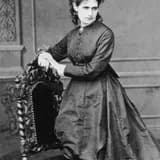
Berthe Morisot died on March 2, 1895, in Paris at age 54 from pneumonia contracted while nursing her daughter Julie.
Berthe Morisot died on March 2, 1895, in Paris at the age of 54. Her death resulted from pneumonia, which she contracted while caring for her teenage daughter, Julie Manet, who had fallen ill. Morisot's own husband, Eugène Manet, had died several years earlier in 1892, leaving her to raise Julie largely on her own during her final years.
At the time of her death, Morisot left behind a substantial and celebrated body of work — estimated at nearly 900 paintings, pastels, drawings, and watercolors — that had established her as one of the preeminent artists of the Impressionist movement, notable for her intimate domestic scenes, luminous brushwork, and sensitive portrayals of women and children's private lives.
Her death occasioned mourning within the close-knit Impressionist community; her friend and fellow painter Edgar Degas, along with Renoir, Monet, and Mallarmé, helped organize a posthumous retrospective exhibition of her work in 1896 to honor her legacy and secure her reputation for future generations. Her daughter Julie, along with cousin Paule Gobillard, inherited a significant portion of her artistic estate and worked throughout their lives to preserve and promote her legacy, including through publication of her correspondence and organization of exhibitions.
Morisot's death marked the loss of one of the few women who had achieved recognition equal to her male peers in the avant-garde art world of her time, and her reputation has only grown since, cementing her status as a pioneering figure in the history of women artists.