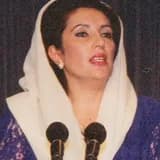
Benazir Bhutto formally became Pakistan's first female prime minister and head of government.
On December 1, 1988, Benazir Bhutto formally assumed the office of Prime Minister of Pakistan, becoming the country's first female head of government. This followed her party's success at the polls and negotiations that allowed her to form a coalition government.
Her ascension marked the restoration of Pakistan's first civilian administration since her father's government had been overthrown and dissolved by General Zia-ul-Haq in a 1977 military coup. For over a decade, Pakistan had been ruled under martial law, with political parties banned or restricted and dissent harshly suppressed.
Bhutto's accession to the premiership therefore represented not just a personal and gender milestone, but a broader restoration of parliamentary democracy in Pakistan. She inherited a country grappling with economic difficulties, ethnic and sectarian tensions, and a powerful military and intelligence establishment that would continue to constrain her authority throughout her time in office. Nonetheless, her becoming prime minister remains a landmark moment in the history of women's political leadership globally, and in the history of democratic governance in Pakistan and the wider Muslim world.