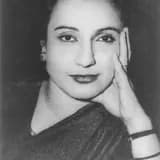
Shaista Ikramullah became one of only two women elected to Pakistan's first Constituent Assembly, shaping the nation's founding legal framework.
On 11 August 1947, as British India was partitioned and the new state of Pakistan came into being, Shaista Suhrawardy Ikramullah was elected as one of the founding members of Pakistan's first Constituent Assembly. She was among only two women in this body, alongside Begum Jahanara Shahnawaz, making her one of the earliest female legislators in the Muslim world.
As a member of the Assembly, she played an instrumental role in drafting Pakistan's early constitutional framework. She was a vocal advocate for the inclusion of women's rights within the constitution, pressing for guarantees of gender equality at a moment when many conservative voices sought to limit women's public role in the newly formed Islamic state.
Her presence in the Assembly was historically significant: it demonstrated that Muslim women could occupy the highest tiers of political decision-making despite deeply entrenched social conservatism and the recent tradition of purdah. Ikramullah used her position to champion the Muslim Personal Law of Shariat Application Act and later the Muslim Family Laws Ordinance, both aimed at securing greater legal rights for women in marriage, divorce, and inheritance.
Her legacy as a pioneering female legislator paved the way for future generations of Pakistani women in politics and remains a landmark moment in South Asian women's political history.