← All women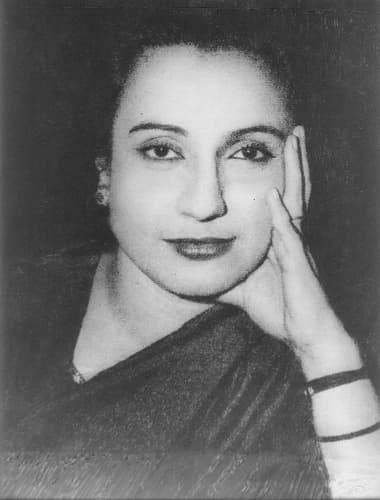
Pakistani · Politics · Activism · Literature
Begum Shaista Ikramullah
July 22, 1915 – December 11, 2000
Early Life and Background
Begum Shaista Ikramullah was born on July 22, 1915, in Calcutta, British India, into a prominent family with a strong tradition of service and accomplishment. Her father, Sir Hassan Suhrawardy, was a notable figure in public health education, and her mother, Begum Hashmat Jahan, was influential in social reforms. This environment greatly shaped her aspirations and worldview.
Shaista was educated at the University of Calcutta and later at the University of London, where she made history as the first Muslim woman to earn a Ph.D. Her doctoral research focused on Islamic political thought, which laid a foundation for her later work in promoting women's roles in Islamic societies.
Career Beginnings and Development
She began her career as a writer and scholar in the 1930s, penning numerous articles on cultural and political issues. Her work was integral in promoting understanding and dialogue about Islamic cultures and principles, particularly as they pertained to women's rights and education.
In the 1940s, as the struggle for Indian independence intensified, Shaista became actively involved in politics. She was a member of the All India Muslim League and played a significant role in advocating for the creation of Pakistan. During this time, she emphasized the need for educational reforms that would include women in the national discourse.
Major Works, Discoveries, or Accomplishments
After Pakistan's independence in 1947, Shaista Ikramullah was elected to the Constituent Assembly of Pakistan, where she was the only woman to serve initially. Her primary focus was on crafting legislation that would support women and children, and she worked tirelessly to ensure that women's issues were included in the new nation's constitution and policies.
As a diplomat, she served as Pakistan's delegate to the United Nations, where she was part of the team that drafted the Universal Declaration of Human Rights. Her contributions to the Declaration were instrumental, reflecting her strong advocacy for equality and justice on a global stage.
Awards, Honors, and Recognition
Shaista's pioneering role in women's education and rights earned her numerous accolades throughout her life. She was widely recognized for her work in both political and academic circles. The government of Pakistan awarded her several honors, and her alma mater, the University of London, recognized her achievements in promoting Muslim women's education.
Personal Life
In 1933, Shaista married Mohammed Ikramullah, a distinguished diplomat in the British Indian and later, Pakistani civil service. They had four children together, and her family remained a steadfast source of support throughout her varied career.
Legacy and Historical Impact
Begum Shaista Ikramullah's legacy is profound and multifaceted. Not only did she break barriers for Muslim women in academia and politics, but she also laid down foundational work in international human rights. Her advocacy for education and women's inclusion in political processes continues to inspire generations.
Later Life and Death
Shaista continued to write and engage in social and educational activism well into her later years. She passed away on December 11, 2000, leaving behind a rich legacy of social and political reform.
Dated achievements
3 indexed.
- Jul231915Politics
Born in Calcutta, British India
Shaista Suhrawardy Ikramullah was born on 23 July 1915 in Calcutta into the prominent Suhrawardy family of Bengal.
View details Shaista Suhrawardy Ikramullah - Wikipedia - Aug111947Politics
Elected member of Pakistan's first Constituent Assembly
Shaista Ikramullah became one of only two women elected to Pakistan's first Constituent Assembly, shaping the nation's founding legal framework.