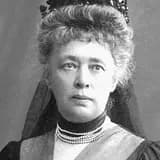
Bertha von Suttner died in Vienna at age 71, just weeks before the outbreak of World War I, the catastrophe she had spent her life warning against.
Bertha von Suttner died in Vienna, Austria, on 21 June 1914, at the age of 71, after a long battle with cancer. Her death came only days before the assassination of Archduke Franz Ferdinand in Sarajevo on 28 June 1914, an event that triggered the chain of diplomatic crises leading directly to the outbreak of World War I in August of that year.
The timing has been remembered by historians and biographers as tragically symbolic: the woman who had devoted her life's work to warning Europe's governments and publics about the horrors of modern industrialized warfare — most famously through her 1889 novel Die Waffen nieder! — did not live to see the very catastrophe she had predicted and fought to prevent. She had continued her advocacy for international arbitration and disarmament until her final months, remaining active in peace congresses and correspondence with political leaders.
Her death marked the loss of one of the most prominent and effective voices of the international peace movement at the precise historical moment when that movement's warnings were about to be tested most severely. In the decades following her death, Suttner's legacy only grew: peace organizations, streets, schools, and — beginning in 2017 — the Austrian 2-euro commemorative coin and various currency and stamp designs have honored her memory. She remains an enduring symbol of early feminist internationalism and anti-militarism.