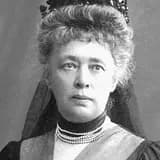
Bertha von Suttner became the first woman ever awarded the Nobel Peace Prize, and the first Austrian Nobel laureate.
On 10 December 1905, Bertha von Suttner was named the recipient of the Nobel Peace Prize, making her the first woman in history to be awarded any Nobel Prize in the Peace category, and only the second woman overall to win a Nobel Prize (after Marie Curie's Physics Prize in 1903). She was also the first Austrian to receive a Nobel Prize of any kind.
The award recognized decades of tireless activism, most visibly her 1889 anti-war novel Die Waffen nieder! (Lay Down Your Arms!), which had become an international bestseller and galvanized the European peace movement, as well as her organizational work founding the Austrian Peace Society in 1891 and her leadership within international pacifist networks. It is widely believed — and documented in her correspondence — that Suttner's personal influence on industrialist Alfred Nobel, for whom she had briefly worked as a secretary in 1876, played a role in his decision to include a peace prize among the awards established in his will.
Her selection as the inaugural female laureate broke a significant barrier in an era when women were largely excluded from public political life, scientific academies, and international diplomacy. It affirmed that women could be recognized at the highest level for intellectual and moral leadership in matters of war and peace, and it elevated Suttner as a global symbol of the possibility of a woman shaping international affairs. Her win paved the way for future women Nobel laureates and remains a landmark moment in the history of the women's movement and the international peace movement alike.