← All women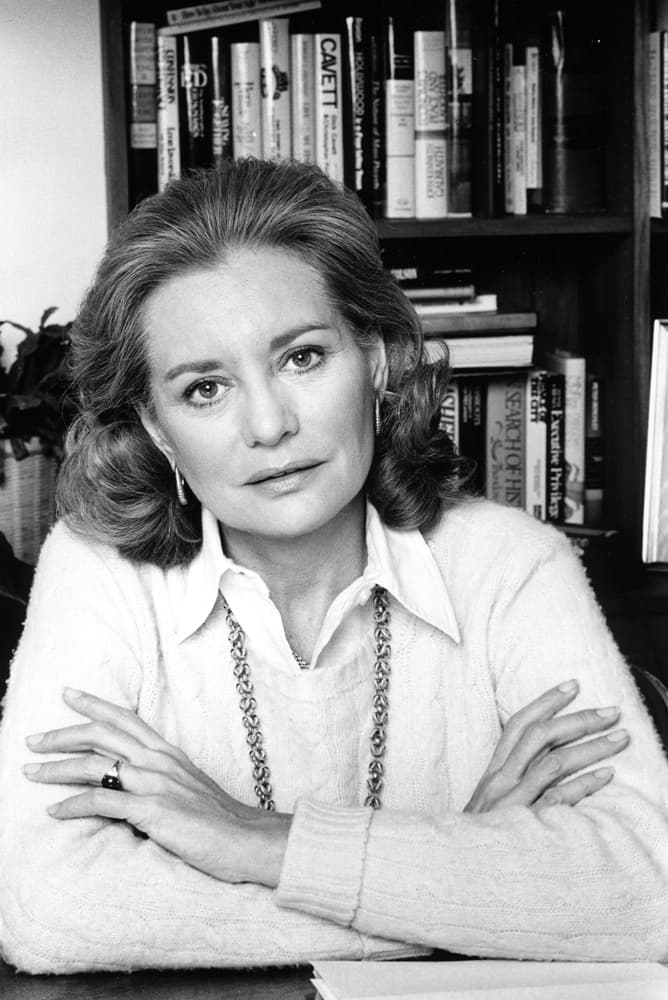
American · Arts · Activism · Literature
Barbara Walters
September 25, 1929 – December 30, 2022
Early life and education
Barbara Jill Walters was born on September 25, 1929, in Boston, Massachusetts, the daughter of Lou Walters, a nightclub and entertainment entrepreneur, and Dena Seletsky Walters. She grew up in a family connected to show business, and that environment helped shape her understanding of public performance, celebrity culture, and audience appeal. Those early influences later became central to her work as a broadcaster and interviewer. Walters spent part of her childhood moving in circles that exposed her to entertainment and to the practical demands of producing public-facing events, experiences that would prove useful in television.
She attended school in Florida and New York before enrolling at Sarah Lawrence College, from which she graduated in 1951 with a degree in English. After college, she began working in New York City in entry-level media and production roles. The path was not glamorous, but it gave her practical experience in television writing and production at a time when the industry was still developing its norms. Her early career was shaped by the limited opportunities available to women in broadcasting, especially women who wanted to do serious news rather than the traditionally gendered “women’s” segments often assigned to them.
Career beginnings
Walters entered television in the 1950s, working behind the scenes before moving into on-air roles. She became known for her ability to combine polish with persistence, and she learned how to navigate a medium in which women were often expected to remain decorative or secondary. In 1961, she joined NBC’s Today program as a writer and reporter. Over time, her responsibilities expanded, and by the early 1970s she had become a familiar presence to viewers. Her work on Today established the style that would define her career: conversational, well-prepared, and able to ask direct questions without losing composure or control of the exchange.
Her rise at NBC culminated in 1974, when she became the first woman to co-host Today. The promotion was significant not simply because it made her visible, but because it placed a woman in a major role on a national news program that was central to American morning television. Walters demonstrated that a woman could help carry a major network franchise while maintaining journalistic credibility. This was a critical step in the gradual opening of broadcasting leadership to women.
ABC News and national prominence
In 1976, Walters moved to ABC News and became the first female co-anchor of a network evening newscast. The appointment was a landmark moment in broadcast history. Evening news was one of the most prestigious platforms in American media, and the decision to place Walters in that role challenged a long-standing industry assumption that men should occupy the authoritative anchor chair. Her presence on the program helped redefine expectations for women in high-profile news roles and made her one of the most recognizable journalists in the country.
Walters’s ABC years produced some of the most famous interviews of her career. In November 1977, she arranged the first joint interview with Egyptian President Anwar Sadat and Israeli Prime Minister Menachem Begin, reflecting her ability to secure access to world leaders and to frame major political developments for a mass audience. In 1999, she conducted the first interview with Monica Lewinsky, which ABC later said became the highest-rated news program ever broadcast by a single network. These interviews exemplified Walters’s skill in turning interviews into major cultural events while also handling politically and emotionally charged subjects.
Her interviewing style was a defining feature of her public identity. Walters was known for careful preparation, direct questions, and a tone that often seemed intimate while remaining controlled. She interviewed presidents, heads of state, entertainers, and other public figures, and her conversations frequently became part of the historical record. Her reputation rested on the combination of access and technique: she could obtain interviews with major figures and then elicit responses that were both newsworthy and widely discussed.
20/20, specials, and later television work
Walters became closely associated with ABC’s news magazine 20/20, where she served as a co-host and chief correspondent for many years. The program allowed her to expand beyond daily news into long-form reporting, feature interviews, and special programming. She also created and hosted a large number of television specials that further cemented her public presence. Those specials often focused on interviews with public figures, families, and celebrities, reflecting her ability to blend journalism with popular culture in a way few broadcasters could match.
In 1997, Walters helped launch The View, a daytime talk program that brought women’s perspectives to a mainstream audience in a format that mixed politics, culture, and entertainment. The show became another landmark in her career because it extended her influence beyond traditional news and into a broader conversation about women’s voices in media. She remained associated with the program for years and continued to shape discussions about current events and celebrity culture.
Walters left her regular co-hosting and chief correspondent role at 20/20 in 2004, but she continued to make occasional appearances and special contributions. By then she had already become one of the most enduring figures in American television, recognized for a career that spanned decades and multiple formats. Her professional longevity was especially notable in an industry known for rapid turnover and changing audience tastes.
Awards and honors
Walters received extensive recognition for her work, including multiple Emmy Awards and other career honors. She was widely celebrated for her contributions to broadcast journalism and for helping open the field to women in top-level news positions. Her honors reflected not only longevity but also the historical importance of her barrier-breaking roles. Public tributes frequently emphasized that she was among the first women to hold the most visible positions in television news and that she did so while building one of the most commercially successful and culturally recognizable careers in the medium.
Her professional reputation was reinforced by a longstanding image as a tough, prepared interviewer who could command attention from powerful interview subjects. That reputation, along with her popular appeal, made her one of the best-known journalists of the late twentieth and early twenty-first centuries. She was also frequently recognized in retrospectives on women in journalism, where her career is treated as a crucial example of institutional change driven by individual persistence.
Personal life
Walters was married several times. Her first marriage was to Robert Henry Katz in 1955; the marriage ended in divorce in 1958. She later married theater producer Lee Guber in 1963, and they adopted a daughter, Jacqueline. Walters and Guber divorced in 1976. She subsequently married Merv Adelson twice, first in 1981 and again in 1986; that marriage also ended in divorce. Walters generally kept her personal life less central than her professional identity, but her marriages, divorces, and relationship history were often noted in biographies because of her high public profile.
Her personal life also included the demands of maintaining a career that was highly public and often scrutinized. Like many women in elite media positions, she navigated expectations about appearance, family, and ambition that male colleagues were not as frequently asked to balance. Despite such pressures, Walters sustained a career of unusual length and influence. She remained active well into later life and became an established cultural reference point for questions about interviewing, celebrity access, and women’s advancement in journalism.
Legacy and historical impact
Barbara Walters’s legacy rests on several intertwined achievements. She was a barrier-breaking woman in broadcast journalism, the first woman to co-host Today, the first female co-anchor of a network evening newscast, and one of the most influential interviewers in television history. She helped normalize the presence of women in the most visible seats of American news broadcasting and proved that a woman could be both a serious journalist and a mainstream star.
Her career also changed the economics and aesthetics of television journalism. Walters showed that interviews could be event television, drawing enormous audiences while still engaging with public affairs. She helped establish a model in which the journalist’s personality, preparation, and access were all part of the broadcast’s appeal. For women in particular, her success demonstrated that authority in media did not have to be framed in masculine terms. She became a cultural landmark not simply because she was famous, but because she moved the boundaries of what women could do in journalism.
After her death on December 30, 2022, tributes consistently described her as a trailblazer whose work had reshaped television news. That description is well earned. Barbara Walters’s life traces the history of women’s expanding access to power in American media, and her achievements remain central to any account of the history of women in broadcast journalism.
Dated achievements
6 indexed.
- Sep251929Science
Birth of Barbara Walters
Barbara Jill Walters was born in Boston, Massachusetts, on September 25, 1929.
View details Barbara Walters | Britannica - Jan011974Science
First woman to co-host NBC's Today show
Walters became the first woman to co-host NBC's Today show, breaking a major barrier in morning television journalism.