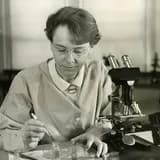
McClintock received her Nobel Prize in Stockholm, becoming the first woman with an unshared Nobel in Physiology or Medicine.
On December 10, 1983, Barbara McClintock traveled to Stockholm, Sweden, to receive the Nobel Prize in Physiology or Medicine at the annual Nobel Prize Award Ceremony, held on the anniversary of Alfred Nobel's death. She received her medal and diploma directly from the King of Sweden in a ceremony steeped in tradition and international prestige.
This moment cemented McClintock's status as the first woman to receive an unshared Nobel Prize in Physiology or Medicine and the first American woman to win any unshared Nobel Prize in the sciences. Previous women Nobel laureates in the sciences, such as Marie Curie and Gerty Cori, had either shared their prizes with male collaborators or won in different scientific categories. McClintock's solo recognition underscored the singular, independent nature of her research program, much of which she conducted with little collaboration over decades at Cold Spring Harbor Laboratory.
The ceremony represented the culmination of a lifetime of rigorous, often solitary scientific inquiry into maize genetics. It also symbolized a broader shift in the scientific establishment's willingness to recognize contributions from women scientists at the highest level. McClintock's Nobel lecture and subsequent public recognition brought her theories on genome plasticity and transposable elements to a global audience, cementing their central place in modern molecular biology and inspiring generations of geneticists.