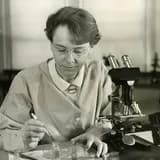
Nobel Assembly announced McClintock's solo Nobel Prize for discovering mobile genetic elements, a historic first for a woman in the category.
On October 10, 1983, the Nobel Assembly at Karolinska Institutet announced that Barbara McClintock had been awarded the Nobel Prize in Physiology or Medicine "for her discovery of mobile genetic elements." Remarkably, she received the prize entirely on her own, without sharing it with any co-recipients — an exceedingly rare occurrence in the sciences.
This announcement came more than three decades after McClintock first described transposable elements, or "jumping genes," in maize during the late 1940s and early 1950s. Her findings had initially been met with confusion and skepticism by the broader scientific community, as they contradicted the prevailing view of the genome as a static, fixed structure. It was only with the advent of molecular biology techniques in the 1970s, which found transposable elements in bacteria, yeast, fruit flies, and other organisms, that the profound significance of her work became universally recognized.
The announcement made McClintock the first woman to win an unshared Nobel Prize in Physiology or Medicine and the first American woman to win any unshared Nobel Prize in the sciences. It represented a landmark moment of vindication for a scientist who had worked largely outside the mainstream, often alone, and whose meticulous, decades-long dedication to a single research organism ultimately reshaped modern genetics.