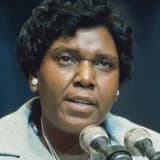
Awarded the Presidential Medal of Freedom by President Bill Clinton on September 29, 1994, for her contributions to civil rights and public service.
On September 29, 1994, President Bill Clinton presented Barbara Jordan with the Presidential Medal of Freedom, the highest civilian honor awarded by the United States government, in recognition of her extraordinary contributions to civil rights, constitutional law, and American public life.
By this point, Jordan had retired from Congress in 1979 due to complications from multiple sclerosis, but she remained an influential public voice, teaching at the LBJ School of Public Affairs at the University of Texas at Austin and chairing the U.S. Commission on Immigration Reform. The Medal of Freedom recognized both her past legislative accomplishments—including her pivotal role in the Watergate hearings and her championing of voting rights expansions—and her continued contributions to public policy discourse.
The award ceremony highlighted Jordan's remarkable career trajectory: from a young Black woman growing up under segregation in Houston's Fifth Ward, to the first Black woman elected to the Texas Senate, to a celebrated congresswoman and constitutional voice during one of the nation's gravest political crises.
Jordan received the medal despite her declining health, having been diagnosed with leukemia in addition to living with multiple sclerosis for many years. Her acceptance of this honor represented a culminating recognition of a lifetime devoted to public service, constitutional integrity, and the expansion of civil rights, just over a year before her death in January 1996.