← All women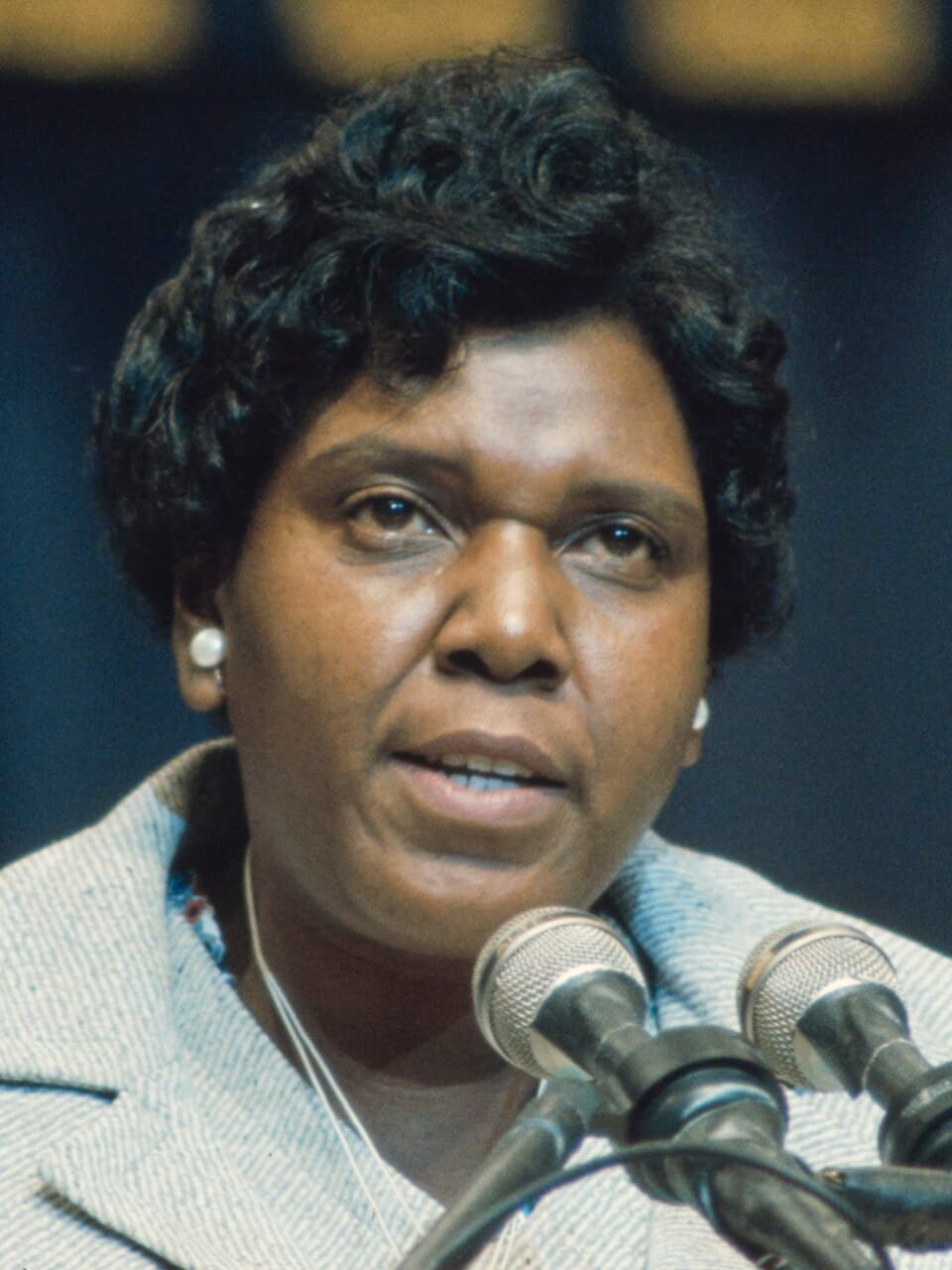
American · Politics · Activism · Law
Barbara Jordan
February 21, 1936 – January 17, 1996
Early Life and Background
Barbara Charline Jordan was born on February 21, 1936, in Houston, Texas’s historic Fifth Ward, a predominantly Black, working‑class neighborhood shaped by Jim Crow segregation.[1][4][5][13] She was the youngest of three daughters of Benjamin M. Jordan, a Baptist minister, and Arlyne Patten Jordan, a teacher and skilled public speaker.[1][4][5] Her parents emphasized education, discipline, and faith, and family life revolved around church activities and community service.
Growing up in mid‑20th‑century Houston, Jordan experienced the constraints of segregation firsthand: racially separated schools, limited public services, and sharply restricted political representation for African Americans.[1][10] These conditions informed her later insistence that the U.S. Constitution must be a living guarantee of rights for all citizens, including those historically excluded.
Jordan attended Phyllis Wheatley High School, an all‑Black school where she first discovered her talent for debate. A teacher encouraged her to join the debate team, and she quickly excelled.[1][5][6] In one formative episode, Jordan and her teammates traveled to a debate tournament at Texas Southern University (TSU), then a relatively new institution created to circumvent integration at the University of Texas. Her skill impressed TSU faculty, and this encounter helped set her course toward higher education and law.
Education and Formative Influences
After graduating from Wheatley High School in the early 1950s, Jordan enrolled at Texas Southern University, a historically Black university in Houston.[1][5][6] She majored in political science and became a star on TSU’s debate team, competing against students from predominantly white universities such as Yale and Brown. Contemporary accounts note that she often out‑argued her opponents, demonstrating the poise and analytical rigor that would later define her political speeches.[5][6]
Jordan graduated magna cum laude from TSU in 1956, earning a bachelor’s degree and solidifying her ambition to pursue law.[1][5][6][10] With limited opportunities for Black students in segregated Texas law schools, she moved north to attend Boston University School of Law. There she further refined her legal reasoning and rhetorical skills while confronting new forms of discrimination in housing, employment, and the profession itself.[1][5][10]
In 1959, Jordan received her law degree from Boston University and was admitted to both the Massachusetts and Texas bars.[1][5] She returned to Houston around 1960 to practice law, opening a small practice and handling a range of civil and criminal cases. Her early legal career taught her how law affected ordinary people’s lives and deepened her belief that legal and political systems must be made accountable to marginalized communities.[2][5][10]
Career Beginnings in Law and Politics
Jordan’s transition from law to politics emerged from both her professional experiences and the broader national context. The civil rights movement was gaining momentum, and African American activism in Houston was pushing for school desegregation, fair employment, and voting rights.[1][10] Jordan worked on the 1960 Kennedy‑Johnson presidential campaign, an experience that introduced her to electoral organizing and national politics.[2]
Inspired by the campaign and convinced that legislative power was essential to civil rights progress, Jordan ran for the Texas House of Representatives in 1962 and again in 1964. Both campaigns, conducted on a countywide basis across Harris County, ended in defeat.[1][6][12] Countywide districts diluted Black voting strength, illustrating for Jordan how electoral structures could entrench racial inequality even after formal barriers had fallen.
These losses were nonetheless crucial learning experiences. Jordan developed networks, honed her campaign skills, and built public recognition. Her perseverance reflected a broader pattern among civil rights‑era Black activists who used repeated campaigns to challenge entrenched political orders.[12]
Breakthrough in the Texas Senate
A key change came when federal courts ordered single‑member legislative districts, undermining the countywide system that had hindered minority candidates.[12] In this altered landscape, Jordan ran for the Texas Senate and, in the general election of November 8, 1966, won a seat representing a Houston district.[2][4][6] Her victory made her the first Black woman elected to the Texas Legislature and the first Black state senator in Texas since 1883.[2][4][6][8]
In the Senate, Jordan quickly earned respect for her meticulous preparation, commanding oratory, and pragmatic approach to coalition‑building. She held key committee assignments and worked on legislation concerning labor protections, environmental regulation, consumer rights, and ethical standards in government.[4][6] Observers noted that she often served as a bridge between liberal and conservative factions, framing issues in terms of fairness and constitutional responsibility rather than narrow partisan interest.
Her legislative effectiveness led colleagues to select her as president pro tempore of the Texas Senate. On March 28, 1972, she assumed that role, becoming the first Black woman in the United States to preside over a legislative body.[1][5][6][8] According to Texas tradition, the president pro tempore is honored by a day as "Governor for a Day." On June 10, 1972, Jordan served as acting governor of Texas, making her the first Black chief executive in the nation and the first Black woman to head a state government, albeit ceremonially.[2][5][10][15]
These milestones in 1972 signaled that the political establishment in a former Confederate state had not only accepted but celebrated a Black woman’s leadership, marking a turning point in Southern political culture.
Election to Congress and Service in the U.S. House
In 1972, Jordan ran for the newly drawn 18th Congressional District of Texas, centered in Houston. On November 7, 1972, she won election to the U.S. House of Representatives, becoming the first Black woman elected to Congress from the South and one of the first two African Americans elected from the former Confederacy in the 20th century.[3][4][6][8][9][10]
Jordan took office in 1973 and served three terms until 1979.[3][4] She joined the House Judiciary Committee, an influential panel overseeing constitutional and legal matters. She was also a member of committees dealing with ethics and civil rights, where she applied her legal training and commitment to justice.
In Congress, Jordan focused on legislation that supported economic opportunity, anti‑discrimination protections, and voting rights. She supported measures to improve access to public housing and Social Security, opposed attempts to weaken civil rights laws, and advocated for women’s rights, including stronger remedies for gender‑based workplace discrimination.[4][6][10]
Watergate and National Prominence
Jordan’s national breakthrough came during the Watergate scandal. As a member of the House Judiciary Committee, she played a critical role in the impeachment inquiry into President Richard Nixon. On July 25, 1974, she delivered a historic opening statement during televised hearings.[2][4][6][10]
In her speech, Jordan traced the history of the Constitution, the framers’ debates over impeachment, and the standards for presidential accountability. She argued that the evidence against Nixon met these standards and that Congress had a duty to act. Her declaration of complete faith in the Constitution resonated deeply, especially coming from a Black woman whose ancestors had been excluded from the document’s protections.[4]
The speech was widely hailed as a masterpiece of constitutional oratory. Commentators noted her calm authority, the precision of her legal analysis, and the moral seriousness with which she approached the decision. The address elevated her to national prominence and has since been frequently quoted in law schools, civics education, and discussions of impeachment.[2][4][6][10]
Advancing Voting Rights and Civil Rights Legislation
Following Watergate, Jordan continued to shape key legislation. She played a leading role in the drive to extend and expand the Voting Rights Act of 1965. Her efforts culminated when President Gerald Ford signed the Voting Rights Act Amendments of 1975 on August 6, 1975.[1][4][6][8]
The 1975 amendments extended protections to Latinx, Indigenous, and Asian American voters, addressing language barriers and other forms of discrimination. Jordan championed provisions requiring bilingual ballots and voter information in jurisdictions with large numbers of citizens whose primary language was not English, as well as strengthened enforcement mechanisms against voter suppression.[1][4][6]
By broadening the scope of the Voting Rights Act, Jordan helped ensure that the promise of democratic participation reached communities that had often been overlooked in earlier civil rights efforts. The amendments contributed to increased minority representation in offices across the country and remain a key component of federal voting rights protections.[1][6][8]
1976 Democratic National Convention Keynote
Jordan’s stature within the Democratic Party culminated in her selection as keynote speaker at the 1976 Democratic National Convention in New York City. On July 12, 1976, she delivered a widely acclaimed address, becoming the first woman and the first African American keynote speaker at a Democratic National Convention.[1][3][4][5][6][8]
Her speech, focused on national unity, moral responsibility, and the meaning of the American experiment, called for a renewed commitment to the "common good." She warned against selfishness and cynicism and urged Americans to remember their obligations to one another. The speech was praised for its eloquence and seriousness; many observers described Jordan as the conscience of the party.[3][5][10]
Jordan would later deliver another major address at the 1992 Democratic National Convention, reinforcing her role as a moral voice in national politics.[6][10] Her convention speeches, together with her Watergate statement, form a core part of her legacy as one of the most powerful orators in modern American political history.
Later Congressional Career and Decision Not to Seek Reelection
During her final terms in Congress, Jordan continued to advocate for civil rights, social welfare, and governmental ethics. She co‑authored measures to improve Social Security benefits and backed legislation addressing discrimination on the basis of race, gender, and disability.[4][6][10]
By the late 1970s, however, Jordan’s health was beginning to decline, and she faced increasing physical challenges. In 1979, she chose not to seek reelection and left Congress at the end of her third term.[3][6] Her departure surprised many who had speculated that she might pursue a statewide office such as U.S. senator or governor, but she opted instead to move into education and public commentary.
Academic Career and Public Intellectual Work
After leaving Congress, Jordan joined the faculty of the Lyndon B. Johnson School of Public Affairs at the University of Texas at Austin. She held the Lyndon B. Johnson Centennial Chair of Public Policy and taught there from the late 1970s until her death.[3][5][6] In 1991, she was formally appointed as a professor of public affairs, further solidifying her role as a leading educator of future public servants.[3][19]
Jordan’s courses and lectures emphasized ethics, constitutional governance, and the responsibilities of citizenship. Students and colleagues recall her demanding high standards of clarity, integrity, and public‑spiritedness. She also delivered numerous speeches across the country on topics such as the separation of powers, civic education, and civil rights, often drawing on her own experiences to illustrate broader principles.[3][5][10]
In the mid‑1990s, Jordan chaired the U.S. Commission on Immigration Reform (often called the Jordan Commission), which Congress had established to evaluate immigration policy and recommend reforms.[3][10][15] The commission’s work emphasized the importance of family reunification, skilled immigration, and effective enforcement, while urging that immigration policy align with broader national interests and respect for the rule of law.
Awards, Honors, and Recognition
Jordan received numerous honors during and after her political career. Beyond her election breakthroughs and leadership positions, she was recognized with universities naming buildings, schools, and programs in her honor, including the Barbara Jordan–Mickey Leland School of Public Affairs at Texas Southern University.[6]
One of her most prestigious honors came on September 29, 1994, when President Bill Clinton awarded her the Presidential Medal of Freedom, the nation’s highest civilian decoration.[3][4][5][10] The citation reflected her contributions as a legislator, constitutional scholar, orator, and educator. She also received numerous honorary degrees and awards from civil rights and legal organizations, recognizing her impact on voting rights, governmental ethics, and public service.
Jordan’s legacy is further institutionalized through foundations and programs that bear her name, including initiatives connected with the Kaiser Family Foundation, which highlights her lifelong commitment to health equity and social justice.[2] The Texas Department of Insurance and other state institutions have also honored her by naming facilities or programs after her.[12]
Personal Life
Jordan was private about her personal life. Biographical accounts focus primarily on her family background, faith, and dedication to work.[1][4][5] She did not marry, and no children are reported in major reference sources. Some later scholarship and journalistic accounts have discussed her long‑term companionship with Nancy Earl, but mainstream biographical summaries remain cautious and limited in detail on this aspect, reflecting both Jordan’s own privacy and historical norms around public discussion of same‑sex relationships.
Jordan lived for many years in Austin while teaching at the LBJ School, maintaining close ties to her Houston roots and to the Baptist tradition in which she had been raised.[5][6] She also coped with significant health challenges, including mobility impairments that gradually required the use of a wheelchair, yet she continued her public engagement as long as possible.
Later Life and Death
In her later years, Jordan balanced teaching, public speaking, and service on advisory bodies such as the Commission on Immigration Reform, even as her health declined.[3][10][15] She remained a powerful presence in public debates, particularly on issues of citizenship, immigration, and civic responsibility.
On January 17, 1996, Barbara Jordan died in Austin, Texas, from pneumonia, a complication of leukemia.[1][2][4][5][7] She was 59 years old. Her death prompted tributes from presidents, members of Congress, civil rights leaders, and students she had taught. She was buried in the Texas State Cemetery, an honor that recognized her as one of the state’s most distinguished public servants.[2][5]
Legacy and Historical Impact
Barbara Jordan is widely regarded as one of the most important American political figures of the 20th century. Her legacy encompasses several intertwined dimensions:
- Barrier‑breaking political representation: Jordan’s election as the first Black woman to the Texas Legislature and the first Black woman in Congress from the South marked milestones in the inclusion of African Americans and women in Southern political institutions.[2][3][4][6][8]
- Constitutional leadership: Her Watergate speech and service on the Judiciary Committee established her as a leading interpreter of the Constitution, emphasizing the rule of law and the ethical responsibilities of public office.[2][4][6][10]
- Civil and voting rights advancement: Through her work on the Voting Rights Act amendments and other legislation, Jordan helped expand democratic protections to marginalized communities, including language minorities and women.[1][4][6][8]
- Oratorical legacy: Jordan’s speeches—especially her 1974 Watergate address and her 1976 and 1992 Democratic convention speeches—are studied as models of political rhetoric grounded in principle and clarity.[3][4][6][10]
- Educational influence: As a professor at the LBJ School and mentor to many students, she helped shape future generations of public leaders committed to ethics and constitutional governance.[3][5][6]
Jordan’s life traced a remarkable arc from segregated Houston to national prominence, demonstrating how determined engagement with law and politics could transform both individual opportunity and institutional structures. For women’s history and civil rights history, she stands as a pivotal figure who broke barriers, articulated a powerful vision of democratic responsibility, and left an enduring imprint on American political culture.
Dated achievements
10 indexed.
- Feb211936Science
Birth in Houston, Texas
Barbara Charline Jordan was born in Houston, Texas, the youngest of three daughters of Benjamin and Arlyne Jordan.
View details Barbara Jordan - Wikipedia - Nov081966Politics
First Black woman elected to the Texas Legislature
Elected to the Texas Senate on November 8, 1966, becoming the first Black state senator in Texas since 1883 and the first Black woman in the state legislature.