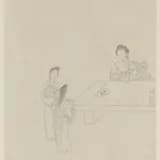
Around 100 CE, Ban Zhao wrote Lessons for Women, the earliest known Chinese text authored by a woman scholar specifically for the education of women.
Around 100 CE, Ban Zhao composed her most famous and influential work: Nüjie, translated as Lessons for Women or Admonitions for Women. Written as guidance for her own daughters and, by extension, women of the Han elite, the text outlined seven chapters covering humility, marital relations, respect for in-laws, and the cultivation of virtue, alongside a case for women's education.
What makes this work historically singular is that, according to scholarship including that published by Cambridge University Press, it is the earliest Chinese text known to have been authored by a woman scholar specifically for women's education. While the work reflects the Confucian gender norms of its time — including the promotion of feminine deference and modesty — it simultaneously makes a groundbreaking case that women deserved formal education equal in seriousness to that given to men, arguing that ignorance made women unable to fulfill their household and ritual duties properly.
The text circulated widely and became one of the most reproduced and referenced didactic works on womanhood in Chinese history, later grouped among the 'Four Books for Women' during the Ming dynasty. Its legacy is complex and contested: some historians view it as reinforcing patriarchal subordination, while others emphasize its progressive assertion of women's intellectual capacity and right to education. Either way, it stands as a landmark in the history of Chinese literature and gender discourse, authored by a woman at a time when female authorship was exceedingly rare.