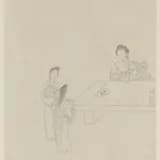
After her brother Ban Gu's death in 92 CE, Ban Zhao took over compiling and completing the monumental Han shu, becoming China's first known female historian.
In 92 CE, Ban Zhao's elder brother Ban Gu, the primary compiler of the Han shu (Book of Han), died before completing this monumental dynastic history — a work chronicling the Former Han dynasty that their father Ban Biao had originally begun decades earlier. The unfinished manuscript, including incomplete chapters and tables, risked being lost to incompleteness.
Ban Zhao was summoned to the imperial library at the request of Emperor He of Han to finish the work. She completed several of the remaining chapters, including the intricate genealogical and chronological tables, and is credited with authoring the treatise on astronomy found in the text. Her work required not only literary skill but deep expertise in history, mathematics, and celestial calculation.
This accomplishment is historically monumental: it marks Ban Zhao as the first known female historian in China, entrusted with completing one of the most important official histories in Chinese civilization. The Han shu became a model for subsequent dynastic histories and remains a foundational text of Chinese historiography. Her role in its completion demonstrates the exceptional trust placed in her scholarly abilities by the imperial court, an extraordinary circumstance for a woman in the patriarchal Han bureaucracy. Her editorial work also included training other scholars, including Ma Rong, one of the era's great scholars, in reading the completed text, cementing her legacy as a foundational intellectual authority.