← All women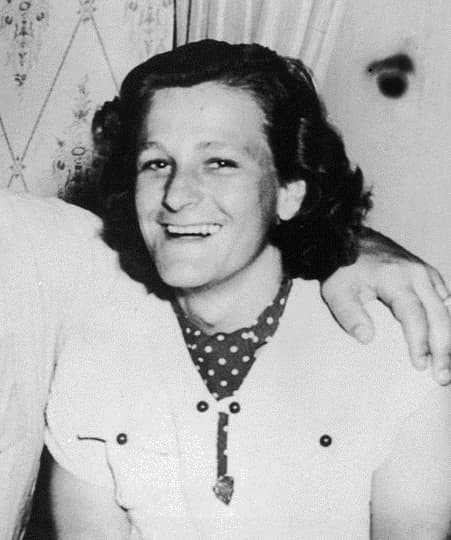
American · Sports
Babe Zaharias
June 26, 1911 – September 27, 1956
Early Life and Background
Mildred Ella "Babe" Didrikson Zaharias was born on June 26, 1911, in Port Arthur, Texas, the sixth of seven children of Norwegian immigrants Ole Didrikson and Hannah Marie Olsen.[4][9][13] Her parents had left Norway for the United States in search of better economic prospects, settling in the Gulf Coast refinery region where industrial work was plentiful but poorly paid.[1][11] When Babe was four years old, the family moved to nearby Beaumont, Texas, where they lived in modest circumstances and her father worked as a carpenter and laborer.[11]
Growing up in South Texas, Zaharias experienced both the challenges of immigrant life and the constraints placed on girls in the early twentieth century. Money was scarce, and all the children were expected to contribute to the household. According to later accounts, she was a boisterous, competitive child who quickly gravitated toward physical play and games that were widely viewed as "unladylike".[1][7]
Her nickname "Babe" reportedly came from her baseball talent: one oft‑repeated story holds that she hit five home runs in a single childhood game, prompting boys to compare her to Babe Ruth.[7][9] Other sources note that her family first called her "Baby," and the name evolved into "Babe" as her sporting prowess became evident.[7] In either case, the nickname signaled both her gender‑crossing athletic ability and her emergence as a local sports legend.
Zaharias attended Beaumont High School, where she starred in basketball and other sports for the school team and for the Employers’ Casualty Insurance Company’s AAU teams, which sponsored women athletes as part of a broader corporate amateur program.[1][10] Formal schooling was limited—she left high school without graduating—but organized sport quickly became her primary route to recognition and mobility.
Career Beginnings in Basketball and Track & Field
Zaharias’s first major successes came in basketball. Playing for the Employers’ Casualty team in Dallas, she became one of the stars of the AAU women’s leagues, known for her aggressive style and scoring ability.[1][9] Her basketball reputation helped the company justify sponsoring her in track and field events, which were gaining popularity but still offered few opportunities for women.
By 1930 she had begun to dominate AAU track and field competitions. That year she won the AAU javelin with a throw of 133 feet 6 inches, setting a U.S. AAU record in the event.[9] In 1931 she entered eight events at the national AAU meet, winning six and setting world records in the high jump, 80‑meter hurdles, javelin, and baseball throw.[4][9] These performances demonstrated an unprecedented breadth of ability: she could sprint, hurdle, jump, and throw at an elite level, at a time when many questioned whether women should participate in track and field at all.
Her multi‑event prowess earned her national attention. Magazines such as Famous Athletes of Today named her "the world’s greatest girl athlete," and sportswriters began to treat her as a serious competitor rather than mere novelty.[7][9] Still, she confronted dismissive attitudes and stereotypes about women in sport; journalists often mocked her muscular build or framed her achievements as freakish.
Breakthrough at the 1932 AAU Championships and the Los Angeles Olympics
Zaharias’s crowning moment in track and field came on July 31, 1932, at the AAU national championships in Evanston, Illinois.[2][9] Competing for the Employers’ Casualty Insurance team, she entered seven events, winning or tying for first in six and breaking four world records in a single afternoon—in the javelin, 80‑meter hurdles, high jump, and baseball throw.[2][9] Because team points were awarded to individuals, her scoring alone was enough to win the national team championship, effectively making her a one‑woman team.
This extraordinary performance occurred just days before the 1932 Summer Olympics in Los Angeles. Despite her dominance, Olympic rules allowed women to compete in only three track and field events. Zaharias therefore had to choose among her specialties. She selected the javelin throw, the 80‑meter hurdles, and the high jump, a combination that already signaled her versatility.[13]
On August 2, 1932, she won Olympic gold in the javelin, setting a world and Olympic record of 143 feet 4 inches (43.69 m).[3][4][13] The next day she broke her own world record in the 80‑meter hurdles and, on August 5, captured a second gold in the hurdles with a time of 11.7 seconds.[1][4][9] On August 7 she tied for the winning height of 5 feet 5 inches (1.65 m) in the high jump, but officials ruled her Western roll technique illegal and awarded her the silver medal instead.[4][13]
These results made Zaharias one of the stars of the Los Angeles Games. She left with two gold medals and one silver, and—critically—with medals in running, jumping, and throwing events. Historians note that she remains the only track‑and‑field Olympian of any gender to win medals in all three categories at a single Games.[2][4] The feat confirmed her status as perhaps the most versatile track and field athlete of her era.
Barnstorming and Transition to Golf
Following the 1932 Olympics, Zaharias capitalized on her fame by barnstorming across the United States with a team called "Babe Didrikson’s All‑Americans."[10] She appeared in exhibition basketball games, track events, and other performances, often emphasizing entertainment as much as competition. These tours were part of a broader pattern in which women athletes, denied stable professional circuits, pieced together livelihoods from appearances, endorsements, and semi‑staged contests.
During the mid‑1930s, Zaharias increasingly turned her attention to golf. She had taken up the sport earlier but now began to practice intensively, often spending long hours on the driving range and course. By 1935 she had transitioned largely to professional golf, while still technically barred from many amateur events because she had accepted money for exhibitions.[9]
Her early golf career involved both showmanship—such as long‑drive exhibitions—and increasingly serious competition. She quickly won major amateur titles after regaining amateur status, including the Texas Women’s Amateur and the Western Women’s Open, signaling that her talents extended fully into a new sport.[9]
Pioneering Appearances on the Men’s PGA Tour
In golf, Zaharias again tested gender boundaries. On January 5, 1938, she became the first woman to compete in a PGA Tour event when she played in the Los Angeles Open, a men’s tournament.[4] She had qualified through the standard process and played from the same tees as male professionals. Although she shot 81–84 and missed the cut, her participation generated national headlines and controversy, challenging assumptions that professional golf should remain exclusively male.[4]
She returned to the Los Angeles Open in 1945, shooting a 76 in the first round.[4] Over that season she entered three PGA Tour events and made the 36‑hole cut in all three, making her the only woman known to have made a cut in a PGA Tour tournament.[4] These appearances were not merely publicity stunts; they demonstrated that a woman golfer could meet performance standards on one of the world’s most competitive tours.
Such experiments in gender integration did not immediately transform the structure of men’s professional golf, but they broadened public imagination about what women could do in traditionally male arenas. Zaharias’s PGA Tour play remains a benchmark in discussions about mixed‑gender competition in golf.
Dominance in Women’s Golf and Major Championships
By the 1940s, Zaharias was widely regarded as the greatest woman golfer of her time.[8][9] She won a staggering number of tournaments—sources commonly cite 82 or 83 amateur and professional titles—including key events such as the U.S. Women’s Amateur and the British Ladies Amateur.[8][9][11]
One of her most important international victories came on May 31, 1947, when she won the British Ladies Amateur Championship at Gullane Golf Club in Scotland.[11] She thus became the first American woman to win the title and later the first woman to hold both the British and U.S. women’s amateur crowns.[11] The win signaled that American women could excel in the traditional bastions of British amateur golf and helped globalize women’s competitive golf.
Zaharias’s shift to professional majors accelerated with the creation of new women’s championships. On July 22, 1948, she captured the inaugural U.S. Women’s Open at Forest Lake Country Club in Michigan, winning by eight strokes and claiming her first professional major.[8] Organized under the auspices of the USGA, the event marked a significant step in institutional recognition of women’s elite golf.
In 1950, Zaharias had one of the most dominant seasons in women’s golf history. She won the Titleholders Championship, the Women’s Western Open, and the U.S. Women’s Open, completing what contemporaries called the women’s "grand slam" of major titles.[4][8] On September 3, 1950, she secured her second U.S. Women’s Open at Atlantic City Country Club, strengthening her hold on the national championship.[8]
Her tenth and final major came at the 1953 U.S. Women’s Open. On July 18, 1953, at Salem Country Club in Massachusetts, she won by a record margin of 12 strokes, only months after undergoing surgery for cancer.[4][8][11] The performance is often described as one of the most courageous comebacks in golf history.
Founding the LPGA and Institutional Leadership
Beyond individual titles, Zaharias played a crucial role in building the infrastructure of women’s professional golf. On January 25, 1950, the Ladies Professional Golf Association (LPGA) was officially incorporated, and she was among its founding members.[4][10] The LPGA provided an organized tour, governance structure, and marketing platform for women golfers, replacing the earlier patchwork of exhibitions and isolated tournaments.
Her presence as a co‑founder brought instant credibility to the new association. Zaharias’s fame as an Olympic champion and major winner helped draw spectators and sponsors, while her showmanship skills, honed in barnstorming tours, made her an asset at pro‑ams and promotional events.[10]
Throughout the 1940s and early 1950s, she continued to dominate LPGA play, contributing to its growth. In the broader landscape of women’s sports, the LPGA stood out as one of the first stable, nationally recognized professional circuits for women. Zaharias’s dual role as star and organizer underscores her importance not only as an athlete but as a builder of institutions that expanded opportunities for women.
Awards, Honors, and Public Recognition
Given her extraordinary achievements, Zaharias received numerous honors during and after her lifetime. She was a multiple‑time winner of the Associated Press "Female Athlete of the Year" award; sources commonly note that she received the honor six times, reflecting sustained dominance across different sports.[7][9] In 1950 the Associated Press named her "Woman Athlete of the Half‑Century," a title that underscored her status as the leading female athlete of the first fifty years of the twentieth century.[7][9]
She has been inducted into both the World Golf Hall of Fame and the LPGA Hall of Fame, which recognize her ten major championships and transformative impact on women’s golf.[8][15] The National Women’s Hall of Fame also honors her as one of the foremost female athletes in American history.[10]
Posthumous tributes have included museum exhibits, statues, and the creation of the Babe Didrikson Zaharias Foundation, which promotes her memory and supports cancer‑related causes.[11] Regional institutions such as the Museum of the Gulf Coast in Port Arthur and the Babe Zaharias Museum in Beaumont preserve artifacts and narratives from her life.[2][11]
Personal Life
Zaharias’s personal life intertwined with her public persona. In 1938 she married George Zaharias, a Greek‑American professional wrestler and sports promoter.[4][7] The couple settled in Florida and later in Texas, and George frequently managed Babe’s business affairs and helped organize tournaments and exhibitions.
They did not have children, a fact sometimes noted in biographies that discuss the difficulty of combining intense athletic careers with mid‑century expectations of domestic motherhood.[9] Instead, the couple’s partnership focused on sport and promotion; together they navigated endorsements, scheduling, and media relations.
Zaharias was also known for her flamboyant personality and self‑promotion, often embracing publicity that challenged conventional notions of femininity. Some later writers have debated aspects of her gender expression and personal relationships, but mainstream historical sources emphasize her marriage to George and their shared work in professional sport.[7][9]
Later Life, Illness, and Death
In the early 1950s, as she continued to dominate the LPGA, Zaharias began experiencing health problems. In 1953 she underwent surgery for cancer, commonly identified as colon cancer in later sources.[11][14] Many assumed her competitive career would end, but she returned to golf and, as noted, won the 1953 U.S. Women’s Open by 12 strokes.
Her openness about the diagnosis was unusual for the time. Rather than keeping her illness private, she discussed it with the press and used her platform to encourage others facing serious disease. Together with George Zaharias, she helped establish funds to assist cancer patients, reflecting an emerging role as public advocate.[7]
Despite initial improvement, her health declined, and she eventually could no longer compete at the highest level. On September 27, 1956, Zaharias died of cancer in Galveston, Texas, at the age of 45.[4][13][14] Her death prompted widespread tributes from sportswriters and fellow athletes, many of whom called her the greatest female athlete of all time.
Legacy and Historical Impact
Zaharias’s legacy in women’s history and sports is multifaceted. As an athlete, she demonstrated an unprecedented combination of abilities: world‑record performances in multiple track and field events, three Olympic medals across running, jumping, and throwing, and ten major championships in professional golf.[4][8][13] Few athletes of any gender have matched such cross‑disciplinary dominance.
Her career also challenged social norms. At a time when many still argued that vigorous sport was harmful or unfeminine for women, Zaharias embraced full‑throttle competition and physical training. She played basketball, baseball, and golf with men, entered men’s professional tournaments, and publicly defied expectations of how women should look and behave.[1][4][7]
Institutionally, her role in founding the LPGA helped bring lasting professional structure to women’s golf. The LPGA tour created career paths for future generations of players, from Mickey Wright and Patty Berg to modern stars, and it stands as one of the earliest continuously operating women’s professional sports organizations.[4][10]
Her example inspired countless young women to pursue athletics seriously, and her story remains a standard reference in histories of women’s sport, gender integration, and the evolution of media coverage of female athletes. Museums, biographies, and educational resources continually present her as an icon of women’s physical potential and resilience.[1][2][10][11]
Finally, Zaharias’s response to illness—returning to major‑championship golf after cancer surgery and speaking publicly about her disease—expanded public conceptions of the athlete as a figure of courage beyond the playing field. In this sense, her impact reaches beyond records and titles: she helped show that women athletes could be central public figures in debates about health, gender, and the meaning of competitive excellence.
Dated achievements
14 indexed.
- Jun261911Sports
Birth in Port Arthur, Texas
Mildred Ella "Babe" Didrikson Zaharias was born in Port Arthur, Texas, beginning the life of one of the most dominant multi-sport athletes of the 20th century.
View details Babe Didrikson Zaharias (Britannica) - Aug021932Sports
Olympic gold and world record in javelin
Zaharias won Olympic gold and set a world record in the women’s javelin throw at Los Angeles 1932.