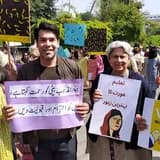
Aurat March 2025 continued its tradition of International Women's Day protests, framed by commentators as a defining moment in Pakistan's women's rights history.
On March 8, 2025, the Aurat March convened for its eighth consecutive International Women's Day mobilization, with demonstrations held across major Pakistani cities. By this point, the march had firmly established itself as the preeminent annual feminist demonstration in the country.
Commentators, journalists, and scholars increasingly framed the movement in retrospective terms, describing it as a 'torchbearer' of contemporary Pakistani feminism and a defining chapter in the nation's history of women's rights activism. Academic analyses published around this period, including work appearing in international journals, examined the march's long-term impact on public discourse, legal advocacy, and the political mainstreaming of feminist demands.
The 2025 march built on the historical memory work begun with the February 2025 commemoration of the 1983 anti-Zia protest, explicitly framing the contemporary movement as part of a continuous decades-long lineage of Pakistani women's resistance rather than a recent or externally imported phenomenon.
Eight years after its founding, the Aurat March's persistence — despite continued legal challenges, conservative backlash, and periodic threats of violence against organizers — stood as testament to the resilience of grassroots feminist organizing in Pakistan, and the march continued to serve as a platform through which successive generations of women articulated evolving demands for equality, safety, and autonomy.