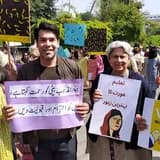
Aurat March held its fourth annual demonstrations on International Women's Day 2021, articulating intersectional demands across major cities.
On March 8, 2021, the Aurat March convened for the fourth consecutive year, with organized marches in major Pakistani cities including Karachi, Lahore, Islamabad, Peshawar, and Multan. By this point the march had become a firmly established annual tradition on the Pakistani civil society calendar.
The 2021 march placed particular emphasis on intersectionality, amplifying the voices and demands of marginalized communities including religious minorities, transgender persons, disabled women, and workers in the informal economy. Organizers explicitly framed the march as a coalition-building space rather than a singular monolithic movement, reflecting years of internal dialogue about inclusivity within Pakistani feminism.
As in previous years, the march faced legal challenges, including petitions in Lahore High Court seeking to restrict or ban the event on grounds of alleged obscenity or blasphemy; courts largely permitted the marches to proceed, citing constitutional rights to peaceful assembly and expression.
The persistence of the march through four consecutive years — despite legal challenges, social media smear campaigns, and occasional violent confrontations with counter-protesters — demonstrated the movement's institutional resilience. Academic literature from this period increasingly analyzed Aurat March as a case study in sustained grassroots feminist organizing under conditions of religious conservatism and political instability.