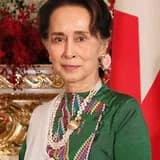
Under Suu Kyi’s leadership, the NLD wins about 80% of elected seats in Myanmar’s first openly contested election in 25 years.
On 8 November 2015, Aung San Suu Kyi led the National League for Democracy to a sweeping victory in Myanmar’s general election, the first openly contested national poll in 25 years.
The NLD won about 80% of the elected seats, and the ruling Union Solidarity and Development Party (USDP), backed by the military, conceded defeat. Constitutional provisions barred Suu Kyi from the presidency because she had foreign family members, but the election was widely understood as a mandate for her leadership and for democratic change.
This victory is historically important as a major step in Myanmar’s partial transition from military rule. It allowed the NLD to form a government and brought many former dissidents into formal office, altering the balance of power between civilians and the military, even though the army retained extensive constitutional prerogatives.
In women’s history, 8 November 2015 stands out as a moment when a woman, long recognized as a political prisoner and human-rights icon, led her party to national electoral triumph. It demonstrated women’s capacity to secure mass democratic mandates in societies emerging from authoritarianism, even amid institutional barriers to holding the highest office.