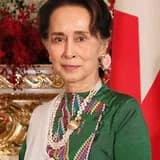
The Norwegian Nobel Committee announces Suu Kyi as the 1991 Nobel Peace Prize laureate.
On 14 October 1991, the Norwegian Nobel Committee announced that Aung San Suu Kyi would receive the Nobel Peace Prize for 1991, citing her "non-violent struggle for democracy and human rights" in Myanmar.
At the time of the announcement, Suu Kyi was still under house arrest, unable to travel to Oslo or participate in the ceremony. The committee emphasized that the prize was also intended to draw attention to the many Burmese citizens similarly engaged in the fight for democracy.
This announcement is one of the most historically significant moments in Suu Kyi’s life. The Nobel Peace Prize catapulted her into global prominence, making her a central figure in international human-rights discourse and intensifying diplomatic and civil-society pressure on Myanmar’s junta.
For women’s history, the 14 October 1991 announcement underscored the recognition of women as leaders in peace and democracy movements beyond the West. Though not the first woman to receive the Peace Prize, Suu Kyi’s selection highlighted the role of Asian women in nonviolent resistance and became a touchstone for advocacy networks focused on women’s political rights and participation.