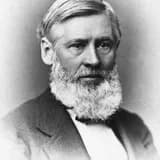
By 1863 Gray was widely recognized as America’s leading botanist and a major early advocate for applying natural selection to plants.
Also in 1863, Asa Gray was recognized as the leading American botanist and as an early advocate for applying natural selection to botany. The source used here dates the milestone to that year, though not to a specific day and month. This recognition reflected the culmination of decades of work on North American flora, plant taxonomy, and scientific communication.
The significance of this milestone lies in Gray’s synthesis of meticulous empirical botany with emerging evolutionary theory. At a time when many American scholars were cautious about Darwin’s ideas, Gray argued that natural selection could help explain variation in plants without collapsing scientific inquiry into irreligion. His approach made evolution more intelligible to a wider American audience and provided a powerful example of how a botanist could engage one of the century’s most controversial theories.
Gray’s prominence also marked the maturity of American botany as a discipline. He had moved beyond isolated specimen study to shape the taxonomic understanding of an entire continental flora. In an age when the United States still relied heavily on European scientific authority, Gray’s standing demonstrated that American naturalists could set agendas rather than merely follow them.