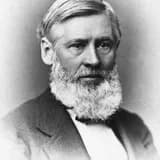
Gray became a foreign member of the Royal Society in 1873, one of the highest international honors in science.
In 1873, Asa Gray was elected a foreign member of the Royal Society. The exact day and month are not available in the source provided, but the honor itself is well documented. Membership in the Royal Society was among the highest international recognitions a scientist could receive, especially for a scholar working outside Britain.
The election was significant because it reflected the maturity and international reach of Gray’s scientific reputation. By this point he was known for his botanical manuals, his taxonomic synthesis of North American flora, and his role in interpreting Darwinian ideas for American readers. The Royal Society’s acknowledgment showed that his work belonged to the broader scientific canon of the nineteenth century.
It also mattered symbolically for American science. Gray’s election signaled that a U.S.-based botanist could be recognized as an equal by Europe’s most prestigious scientific institution. In an era when transatlantic scientific authority still tended to flow from Europe to America, the honor affirmed that Gray had helped reverse the direction of that intellectual dependence.