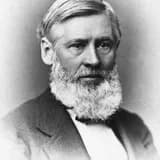
Gray published his first scientific paper in 1833, launching the long scholarly career that would make him a foundational American botanist.
In 1833, Asa Gray published his first scientific paper, a formal beginning to the publication record that would make him the most important American botanist of his century. Although the available sources do not preserve the exact day and month, the milestone is firmly dated to that year and belongs among the earliest markers of his career. By then Gray had already redirected his training away from medicine and toward botany, a decision that reflected both personal conviction and the lack of strong institutional pathways for American plant science.
This first paper mattered because publication was the currency of scientific credibility in the nineteenth century. For a young American scholar, especially one working before the full professionalization of U.S. science, gaining a foothold in print was a decisive step toward recognition. Gray’s early work helped establish him as more than an enthusiastic collector: he was becoming a systematic botanist capable of contributing to classification, description, and the larger project of understanding North American flora.
The broader significance of the paper lies in what followed. Gray’s subsequent writings would shape botanical taxonomy, support the creation of Harvard’s herbarium and botany collections, and later provide one of the principal American bridges to Darwinian evolution. The 1833 publication was therefore not an isolated event but the opening move in a career that would redefine botanical scholarship in the United States.