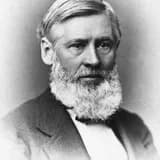
Gray was elected a foreign corresponding member of the Imperial Academy of Sciences in St. Petersburg in 1862, reflecting international recognition.
In 1862, Asa Gray was elected a foreign corresponding member of the Imperial Academy of Sciences in St. Petersburg. The exact day and month are not given in the source used here, but the year is clearly recorded. For an American botanist working in a still-developing scientific nation, international academy membership was a strong sign of global recognition.
The election was significant because it confirmed Gray’s standing beyond the United States. His botanical work had already become central to the taxonomy of North American flora, and European scientific institutions recognized the value of his systematic scholarship. Such honors also mattered diplomatically within science: they helped integrate American researchers into a wider transnational community at a time when the United States was still asserting itself intellectually on the world stage.
For Gray personally, the honor reflected a career built on rigorous taxonomy, extensive specimen work, and respected publications. For American science more broadly, it signaled that U.S.-based scholarship could earn membership in major European academies. That recognition helped erode the era’s assumption that serious natural history had to be validated abroad before it could command authority at home.