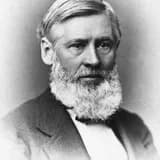
Gray taught the first Harvard Summer School course in 1871, marking an institutional first in the expansion of Harvard education.
In 1871, Asa Gray taught the first Harvard Summer School course. The precise day and month are not available in the source used here, but the date anchors a genuine institutional first. Gray’s participation in the inaugural course linked his name to Harvard’s effort to expand education beyond the traditional academic year and to make advanced instruction more accessible.
This was historically significant because it placed Gray at the center of an educational innovation that widened opportunities for learning in late nineteenth-century America. Summer instruction represented a practical response to changing educational demand, and Gray’s involvement signaled that botany and natural history were not marginal subjects but disciplines worthy of new modes of teaching.
As a first, the event also reflects Gray’s broader role as a builder of institutions. He was not only a classifier of plants and correspondent of Darwin but also an educator who helped define how botany could be taught. In a time when higher education remained limited and elite, the Harvard Summer School initiative hinted at a more flexible and expansive academic future.