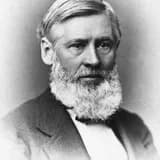
Gray became professor of natural history at Harvard in 1842, a post that let him build the university’s botanical collections and influence U.S. science.
In 1842, Asa Gray was appointed professor of natural history at Harvard University, a post he held for the rest of his life. The exact day and month are not given in the surviving source, but the year marks a major institutional turning point in American science. Harvard was one of the few centers in the United States capable of supporting serious natural-history research, and Gray’s appointment placed him in a position to shape both scholarship and collections at the nation’s leading university.
The appointment was historically significant because Gray used it to build the foundations of Harvard botany. He helped develop the herbarium and botanical holdings that later became central to the university’s scientific stature. In a period when American universities were only gradually expanding beyond classical learning, Gray’s role represented the emergence of specialized scientific teaching and research at the highest academic level.
It also mattered for the future of American botany. Gray’s Harvard years gave him the institutional base from which he produced influential manuals, trained students, and corresponded with major figures abroad. He occupied the post during a time when botanists in the United States still faced scarcity of resources, limited collections, and the challenge of competing with European taxonomic systems. His appointment therefore signaled not only personal advancement but a broader maturation of U.S. scientific institutions.