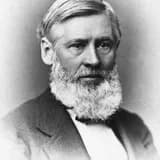
Gray was elected to the National Academy of Sciences in 1863, confirming his status as one of the leading American scientists of his era.
In 1863, Asa Gray was elected to the National Academy of Sciences. The year is documented in the source set, although the exact election date is not provided. This honor placed Gray among the leading scientific figures in the United States at the moment when the nation was building formal structures to recognize scientific excellence.
The election was historically meaningful because Gray’s career exemplified the professionalization of American science. He had moved from medical training to botany, built collections, published authoritative manuals, and trained students through Harvard. Election to the academy recognized not only a body of work but also the emergence of a national scientific elite. In the Civil War era, when the United States faced upheaval, the creation of durable institutions for knowledge was itself a major cultural achievement.
Gray’s academy membership also reinforced his influence on the direction of American botany. It confirmed his role as a senior authority capable of linking taxonomy, fieldwork, and theory. Combined with his correspondence with Darwin and his Harvard appointment, the election marked him as a central architect of nineteenth-century botanical science in the United States.