← All women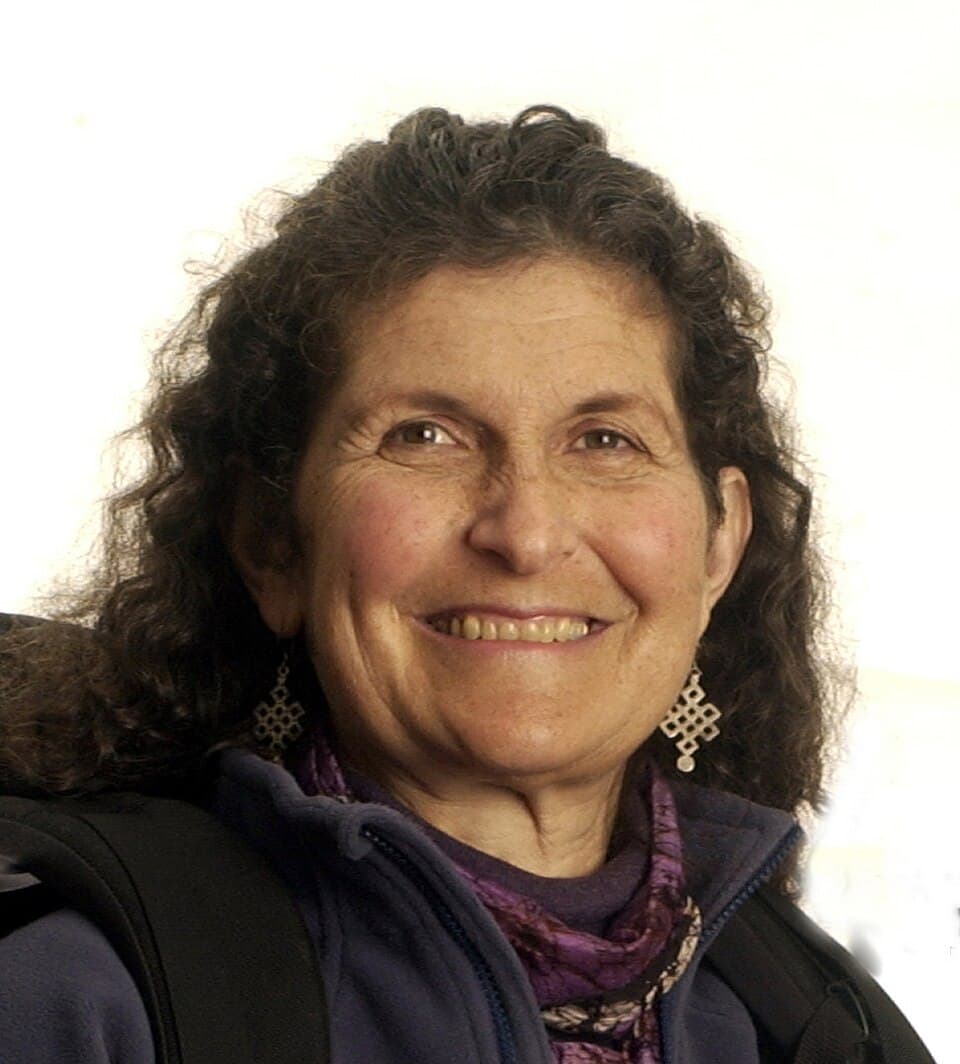
American · Science · Exploration · Activism
Arlene Blum
March 1, 1945 – present
Early Life and Background
Arlene Blum was born on March 1, 1945, in Chicago, Illinois, though some biographical references list Davenport, Iowa, as her birthplace, reflecting minor discrepancies in secondary sources.[1][3][4] She grew up in the American Midwest in the aftermath of World War II, at a time when expectations for women’s roles were still largely confined to domestic and supportive spheres. As she has recounted in lectures and interviews, her early years were marked by curiosity and a desire for adventure, traits that would later find expression both in science and mountaineering.[2][8]
Blum’s academic path began at Reed College in Portland, Oregon, where she studied chemistry during the 1960s. In her introductory chemistry class, she was one of only a handful of women, highlighting the gender imbalance in the sciences at the time.[8] Despite this, she developed a strong interest in physical and biophysical chemistry, encouraged by professors who recognized her talent. Her undergraduate years also coincided with the growth of outdoor recreation and mountaineering culture in the United States, and she began climbing, even as prevailing attitudes suggested that women’s place on expeditions was at base camp doing support work.[8]
Education and Scientific Training
After graduating from Reed College in 1966, Blum pursued advanced studies in chemistry at the Massachusetts Institute of Technology (MIT) and the University of California, Berkeley.[1][4] She ultimately earned a PhD in biophysical chemistry from UC Berkeley in 1971, focusing her research on protein folding and the interactions of molecules in biological systems.[1][6] Her training placed her at the intersection of physical chemistry and biology, equipping her with tools that would later prove crucial in evaluating the health effects of industrial chemicals.
During her graduate years, Blum navigated an academic landscape dominated by men. Accounts from Berkeley recall that she was part of a small cohort of women in the chemistry department, and that she faced both explicit and implicit barriers, such as low expectations for women’s scientific careers and limited models of female leadership in research.[5][8][10] Nonetheless, she developed a reputation for persistence and intellectual rigor, characteristics that would become hallmarks of her later work in environmental health.
Career Beginnings: Mountains and Molecules
From the outset of her professional life, Blum pursued a dual track: mountaineering and scientific research. As a climber, she began tackling increasingly challenging peaks in the western United States and Canada. As a scientist, she conducted postdoctoral and research work in biophysical chemistry, investigating protein structure and the effects of environmental chemicals on biological systems.[1][2][6]
In the late 1960s and early 1970s, she experienced first-hand the gender discrimination common in mountaineering. As she has described, women on expeditions were sometimes permitted only to accompany men to base camp and were expected to cook rather than climb.[8] Rather than accept these restrictions, Blum joined and helped organize expeditions that challenged these norms, setting the stage for historic all‑women ascents in the years to come.
Mountaineering Firsts and Major Expeditions
Denali: First All‑Women Ascent
Blum’s first widely recognized mountaineering breakthrough came with Denali, North America’s highest peak. On May 25, 1970, she co‑led the "Denali Damsels" expedition, which achieved the first all‑women ascent of Denali.[2][5][9] The climb required navigating dangerous glaciers, extreme cold, and altitude, and it took place at a time when all‑female teams on major peaks were virtually unheard of.
The following year, Blum served as deputy leader of a women’s team on Denali, later described in press coverage as the first women’s team to climb Mount McKinley.[7] These expeditions challenged entrenched beliefs about women’s physical capabilities and leadership in high‑risk environments. They also demonstrated that women climbers could organize logistics, manage safety, and make complex route decisions without male direction.
Everest: First American Woman to Attempt the Summit
In 1976, Blum joined the American Bicentennial Everest Expedition, aiming to climb the world’s highest mountain.[1][5][8] On May 7, 1976, during the course of this expedition, she became the first American woman to attempt Mount Everest, reaching a then‑record altitude for a U.S. woman on the peak.[5][8] Although she did not summit, her participation marked a significant milestone in the gradual inclusion of women in high‑altitude Himalayan climbing.
Blum’s Everest attempt coincided with her scientific work; she famously finished a major paper on toxic flame retardants while on the expedition.[8] This dual commitment reinforced her public image as a scientist who also tested limits in the world’s most extreme environments.
Annapurna: First American and All‑Female Ascent
Blum’s most celebrated expedition was her leadership of the American Women’s Himalayan Expedition to Annapurna I. Annapurna, an 8,091‑meter peak in Nepal, had a high fatality‑to‑success ratio and was considered one of the world’s most dangerous mountains.[1][4][5]
On October 15, 1978, the expedition’s first summit team—climbers Vera Komarkova and Irene Beardsley, accompanied by two Sherpas—successfully reached the summit via the Dutch Route, achieving the first American ascent of Annapurna I and the first all‑female ascent of the peak.[1][2][5] Blum, who organized and led the expedition, oversaw fundraising, logistics, team selection, and overall strategy, a substantial leadership undertaking in an era when women rarely headed major Himalayan climbs.
The expedition was also marked by tragedy. On October 16, 1978, climbers Alison Chadwick‑Onyszkiewicz and Vera Watson died on Annapurna in separate accidents.[1][5] Their deaths underscored the extreme risks of high‑altitude mountaineering and profoundly affected Blum, who has memorialized them in her writing and public speaking.
Blum later chronicled the expedition in her bestselling book Annapurna: A Woman’s Place, which combined narrative, reflection on gender dynamics, and an exploration of leadership and risk. The book became an influential text in mountaineering literature and feminist adventure writing.[1][2][6]
Bhrigupanth and the Great Himalayan Traverse
Building on her Annapurna experience, Blum led additional major expeditions. In 1980, she headed a team of Indian and American women that completed the first ascent of Bhrigupanth, a 6,772‑meter peak in the Indian Himalayas.[1] This ascent extended the geographical range of women’s high‑altitude achievements and highlighted international collaboration among women climbers.
In 1981, Blum undertook a long‑distance journey known as the Great Himalayan Traverse, walking across the mountain regions of Bhutan, Nepal, and India.[2][7] The traverse required sustained endurance and complex route planning, emphasizing exploration and cultural immersion as much as summit objectives. It further established her as an adventurer willing to experiment with new forms of engagement with the mountains.
Scientific Work and Environmental Health Advocacy
Groundbreaking Research on Flame Retardants
While Blum was gaining recognition in the climbing world, she was also building a significant scientific career in environmental health. In the 1970s, she investigated tris(2,3‑dibromopropyl) phosphate, a flame retardant used in children’s pajamas.[8][9] Her research showed that the chemical was toxic and a likely carcinogen, capable of mutating DNA.
Blum’s findings were published in a widely publicized study in 1977, which concluded that the flame retardant posed serious health risks.[9][10] The study attracted national attention and influenced the U.S. Consumer Product Safety Commission and other regulators to remove the chemical from children’s sleepwear. This action is credited with protecting a generation of children from daily exposure to a carcinogenic substance.[8]
Her work on flame retardants demonstrated the power of combining rigorous laboratory science with effective communication and advocacy. As a young woman scientist working on consumer-product safety, she confronted skepticism from industry and regulatory bodies, yet persisted until her research helped drive policy change.
Green Science Policy Institute
Blum’s environmental health work deepened in the 2000s. In 2006, she learned that the same harmful tris flame retardant she had helped remove from baby pajamas in the 1970s had reappeared in furniture and children’s products.[2] Concerned by the recurring use of toxic substances, she began organizing scientists, policymakers, and advocates to address systemic issues in chemical regulation.
Her efforts led to the founding of the Green Science Policy Institute (GSPI), a nonprofit organization based in Berkeley, California.[2][11] As the Institute’s executive director, Blum works to provide peer‑reviewed scientific information to decision makers, promoting policies that reduce the use of harmful chemicals in consumer products and industrial applications. GSPI focuses on classes of chemicals—such as certain flame retardants, PFAS (per‑ and polyfluoroalkyl substances), and other persistent pollutants—seeking broad, protective approaches rather than chemical‑by‑chemical regulation.
Through GSPI, Blum has contributed to efforts that helped eliminate or reduce toxic flame retardants in furniture, electronics, and other products, and has played a role in revising fire safety regulations in California to lower reliance on chemical treatments.[2][7][11] Her work exemplifies the application of scientific expertise to public-interest policy and reflects a career‑long commitment to protecting human and environmental health.
Major Publications
Blum is the author of two widely recognized books that bridge her climbing experiences and personal history:
- Annapurna: A Woman’s Place – a narrative of the 1978 American Women’s Himalayan Expedition, exploring the climb, the team’s dynamics, and broader questions about women’s roles in adventure and leadership.[1][2]
- Breaking Trail: A Climbing Life – a memoir that traces her journey from early climbs through Himalayan expeditions and into her scientific and policy work.[2][6]
These works have been praised for combining engaging storytelling with critical reflection on gender, risk, and the meaning of achievement. They occupy an important place in both mountaineering literature and feminist accounts of the outdoors.
Awards, Honors, and Recognition
Blum’s achievements in science and mountaineering have earned her numerous honors. She has been selected as a Fellow of the American Association for the Advancement of Science (AAAS), recognizing her contributions to environmental health and science policy.[11] The U.K. Guardian named her among the world’s 100 most inspiring women, and the National Women’s History Project recognized her as one of 100 “Women Taking the Lead to Save Our Planet.”[11]
In the mountaineering community, Blum has been elected to the Hall of Mountaineering Excellence, underscoring her impact on the sport and her role in expanding women’s participation in high‑altitude climbing.[11] She has also been profiled by major media outlets, including the Los Angeles Times, which in both 1987 and 2014 highlighted her dual identity as an internationally recognized climber and a scientist whose work helped eliminate dangerous fire retardants from consumer products.[7]
Academic institutions have honored her through lectures, profiles, and awards. Reed College has featured her in talks such as "A Life of Mountains and Molecules," and the University of California, Berkeley has profiled her as a distinguished alumna whose career spans research, advocacy, and exploration.[6][11]
Personal Life
Blum has integrated family life into her adventures in ways that further challenged conventional expectations. She has spoken and written about hiking the length of the European Alps with her baby daughter on her back, illustrating her commitment to combining motherhood with an active, outdoor life.[2] This anecdote is often cited as emblematic of her refusal to accept narrow definitions of what women—and mothers—can do.
Public sources emphasize her residence in Berkeley, California, where she continues to work with the Green Science Policy Institute.[4][7] She has generally kept details of her private relationships out of the spotlight, focusing public attention on her professional and expeditionary accomplishments. Her personal narrative, as reflected in her memoir, centers on the evolution of her values around risk, responsibility, and service as she moved from climbing’s high-risk endeavors toward long‑term work in environmental health.
Legacy and Historical Impact
Arlene Blum’s legacy spans three intertwined domains: mountaineering, science, and environmental activism.
In mountaineering, she is celebrated as a pioneer of women’s high‑altitude climbing. Her leadership of the first all‑women ascent of Denali, her status as the first American woman to attempt Everest, and her organization of the first American and all‑female ascent of Annapurna demonstrated that women could lead and staff serious expeditions on the world’s hardest peaks.[1][2][5] These achievements helped dismantle gender barriers in climbing and inspired subsequent generations of women to pursue Himalayan and other high‑altitude objectives.
In science and environmental health, Blum has had enduring impact through her work on toxic flame retardants and her founding of the Green Science Policy Institute. Her research in the 1970s contributed directly to regulatory action that removed carcinogenic chemicals from children’s pajamas, and her later policy work helped reduce the use of hazardous flame retardants in furniture and other products.[2][8][9] She exemplifies the role of the scientist‑advocate who brings technical expertise into public policy to protect human health.
As an activist and communicator, Blum’s books, lectures, and institutional leadership have broadened public understanding of both mountain environments and chemical risk. Her storytelling about Annapurna and her reflections in "Breaking Trail" have become part of the cultural history of women in adventure sports, while her talks on "mountains and molecules" connect physical challenge to ethical responsibilities toward the environment and future generations.[8][11]
Later Life and Continuing Work
In later life, Blum has focused increasingly on policy-oriented science while remaining a prominent figure in mountaineering history. As of the mid‑2020s, she continues to serve as executive director of the Green Science Policy Institute, working with governments, industry, scientists, and citizen groups to advance safer chemical policies.[2][4][11] She also holds a role as a visiting scholar or research associate in chemistry at UC Berkeley, maintaining connections to academic research.[2][11]
Though largely retired from extreme climbing, Blum remains active in hiking and outdoor travel, often using these experiences as metaphors when speaking about long, challenging campaigns to change chemical policy. Her life story is frequently invoked in discussions about women in STEM, the history of environmental regulation, and the evolution of gender roles in adventure sports.
Arlene Blum’s ongoing contributions underscore a central theme of her career: the idea that exploration—whether of mountains or molecules—can and should serve the public good. Her work continues to influence both how we think about women on the world’s highest peaks and how we manage the invisible chemical mountains that surround everyday life.
Dated achievements
11 indexed.
- Mar011945Exploration
Birth of Arlene Blum in Chicago
Arlene Blum is born in Chicago, Illinois; she would become a pioneering mountaineer, environmental health scientist, and author.
View details Arlene Blum – Wikipedia - May251970Exploration
First all‑women ascent of Denali
Blum co-leads the Denali Damsels, achieving the first all-women’s ascent of Denali, a major milestone in women’s mountaineering.