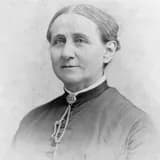
Brown became the first woman to deliver a Fourth of July address in South Butler, New York, breaking a significant public-speaking barrier for women.
On July 4, 1853, Antoinette Brown delivered an Independence Day oration in South Butler, New York, becoming, according to Wayne County's historical records, the first woman ever to give such an address in that community. Public oratory—especially on a patriotic occasion as significant as Independence Day—was considered an exclusively male domain in mid-nineteenth-century America.
Brown had already built a reputation as a compelling public speaker on the era's most contentious social issues: abolition, temperance, and women's rights. Her willingness to stand before a mixed audience and speak on a day devoted to celebrating American liberty and civic virtue was itself a pointed statement about the exclusion of women from full citizenship and public voice.
This address came just months before her historic ordination in the same town, suggesting that the South Butler congregation was already primed to accept her unconventional leadership. The event exemplifies how Brown used symbolically important civic and religious occasions to advance the cause of women's equality, using the very rhetoric of liberty and rights embedded in America's founding mythology to argue for women's fuller inclusion in public life.
Though a local milestone, it reflects the broader pattern of Brown's career: repeatedly being the 'first woman' to occupy spaces reserved for men, using her considerable rhetorical skill to normalize female participation in civic discourse.