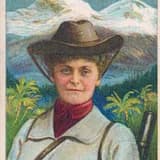
During her 1911 ascent of Mount Coropuna in Peru, Peck planted a 'Votes for Women' pennant at the summit, merging her mountaineering feats with suffragist activism.
In 1911, at the age of 61, Annie Smith Peck climbed Mount Coropuna in Peru, one of the highest peaks in the country. At its summit, she famously planted a banner reading "Votes for Women," a bold and public declaration of her commitment to women's suffrage that merged her physical daring with political activism.
This act was significant because it combined two spheres in which women were marginalized in the early twentieth century: physical exploration and political enfranchisement. By carrying the suffrage banner to one of the most inaccessible and extreme environments on Earth, Peck made a powerful symbolic statement—if women could conquer towering, ice-covered peaks through sheer will and skill, they were certainly capable of exercising the right to vote.
Peck was a vocal supporter of women's rights throughout her life, and this gesture atop Coropuna became one of the most cited examples of intersectional activism in exploration history. It captured public imagination and was widely reported in the press, helping to link the emerging women's suffrage movement with narratives of female physical achievement and courage.
The exact date of the summit banner-planting is recorded in period accounts as occurring in August 1911 during her Coropuna expedition, cementing her legacy not just as a mountaineer, but as a pioneering feminist figure who used her public platform and physical feats to advance women's political rights.