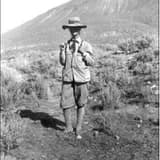
Annie Montague Alexander died on March 27, 1950, in Berkeley, California, at age 82, leaving a lasting legacy in vertebrate zoology and paleobotany.
Annie Montague Alexander died on March 27, 1950, in Berkeley, California, at the age of 82. She spent her final years continuing to support and guide the institutions she had founded, including the Museum of Vertebrate Zoology and the University of California Museum of Paleontology, and maintaining her decades-long partnership with her companion Louise Kellogg, with whom she had shared expeditions, fieldwork, and daily life since around 1908.
By the time of her death, Alexander had personally funded and often participated in dozens of collecting expeditions across California, the Pacific Northwest, Alaska, and East Africa, amassing tens of thousands of specimens of birds, mammals, plants, and fossils that formed the backbone of major university research collections. Her rigorous standards for field documentation, which she helped establish alongside Joseph Grinnell, permanently shaped methodological practices in vertebrate zoology.
Her death marked the end of an era for the museums she sustained, both financially and intellectually, for over four decades. Numerous species and subspecies discovered on her expeditions bear scientific names honoring her (using variants of 'alexandrae'), a testament to her direct contributions to taxonomy and natural history. Her legacy endures through the continued operation and prestige of the Museum of Vertebrate Zoology and the University of California Museum of Paleontology, both of which she helped bring into existence and sustain through personal wealth, hands-on fieldwork, and scientific vision at a time when women were largely excluded from professional science.