← All women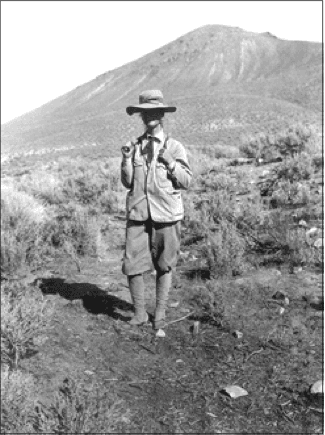
American · Exploration · Science
Annie Montague Alexander
December 29, 1867 – September 10, 1950
Early Life and Background
Annie Montague Alexander was born on December 29, 1867, in Honolulu, Kingdom of Hawaii. Her father, Samuel Thomas Alexander, was a prominent sugar planter, while her mother, Martha Eliza Cooke, was known for her community work. This affluent and supportive background provided Annie with the means to pursue a life of exploration and discovery from an early age.
Educated in her early years in Hawaii, Alexander later attended the University of California, Berkeley, where her fascination with natural history flourished. Her education was marked by rigorous study and mentorship under several prominent scientists, which helped shape her future scientific and philanthropic endeavors.
Career Beginnings and Development
Alexander's career in paleontology began informally, through her expeditions across the western United States. A significant expedition in 1901 led to her formal recognition in the field as she began to donate her findings to the University of California. These contributions marked the inception of the university's noted collections in zoology and paleontology. Her work was characterized by meticulous fieldwork and documentation, setting a standard for future scientific expeditions.
Major Works, Discoveries, and Accomplishments
In 1905, she founded the Museum of Vertebrate Zoology at UC Berkeley, donating $7,000 to establish it. Her leadership in assembling a scientific team, along with her steadfast support, allowed the museum to accumulate one of the richest collections of vertebrate fossils.
She engaged in significant expeditions, such as the well-documented 1905 expedition along the Baja California coastline. These excursions not only contributed valuable specimens but also advanced the understanding of the geographical distribution of different species.
Awards, Honors, and Recognition
While Alexander's work was often behind the scenes, she was greatly respected in the scientific community. Her lasting legacy is cemented in the naming of various species and collections in her honor, ensuring her contributions are remembered by future generations of scientists.
Personal Life
Despite her achievements, Alexander maintained a private personal life, focusing much of her life on her work and travels. She never married, dedicating her resources and energy toward her scientific interests and philanthropic pursuits, maintaining a significant influence without necessarily seeking the spotlight.
Legacy and Historical Impact
Annie Montague Alexander's legacy is profound, not only through her direct contributions to science but also through the enduring institutions she founded and supported. Her life's work laid foundational stones for field science, particularly in paleontology and zoology, and set the stage for the participation of women in scientific research and exploration.
Later Life and Death
Alexander passed away on September 10, 1950, in Oakland, California. Her lifelong contributions continue to impact the fields of paleontology and zoology, with her collected works still forming the backbone of UC Berkeley's research archives today.
Dated achievements
3 indexed.
- Dec291867Science
Born in Honolulu, Kingdom of Hawaii
Annie Montague Alexander was born in Honolulu, then part of the Kingdom of Hawaii, to sugar-plantation magnate Samuel Thomas Alexander and Martha Eliza Cooke.
View details Annie Montague Alexander - Wikipedia - May041908