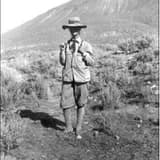
Annie Alexander founded and funded the Museum of Vertebrate Zoology at the University of California, Berkeley, one of the first natural history museums founded and sustained by a woman.
On May 4, 1908, Annie Montague Alexander formally founded the Museum of Vertebrate Zoology (MVZ) at the University of California, Berkeley, providing the initial funding and vision that established it as a research institution dedicated to documenting the vertebrate fauna of western North America.
Alexander had already spent years personally collecting specimens on fossil-hunting and natural history expeditions, and she recognized the need for a permanent institutional home for scientific specimens, records, and research. She recruited the eminent zoologist Joseph Grinnell as the museum's first director, and the two collaborated closely for decades, with Alexander funding expeditions, museum operations, and staff salaries out of her own family fortune, often anonymously or with minimal recognition.
This was an extraordinary act for a woman of her era: not merely donating money, but actively directing the museum's scientific priorities, methodology (including rigorous field-note standards that became known as the 'Grinnell System'), and collecting expeditions. The MVZ became -- and remains -- one of the premier vertebrate zoology research collections and training grounds in the world, producing generations of influential ecologists and conservation biologists.
Her founding of the MVZ stands as one of the most significant contributions by a woman to American natural history science, establishing a legacy institution that persists over a century later.